
Eastern refinery modernization to boost annual capacity to 4.5m Tonnes
Bangladesh is on the verge of transforming its domestic fuel-processing landscape through a sweeping modernization of the Eastern Refinery, a move designed to

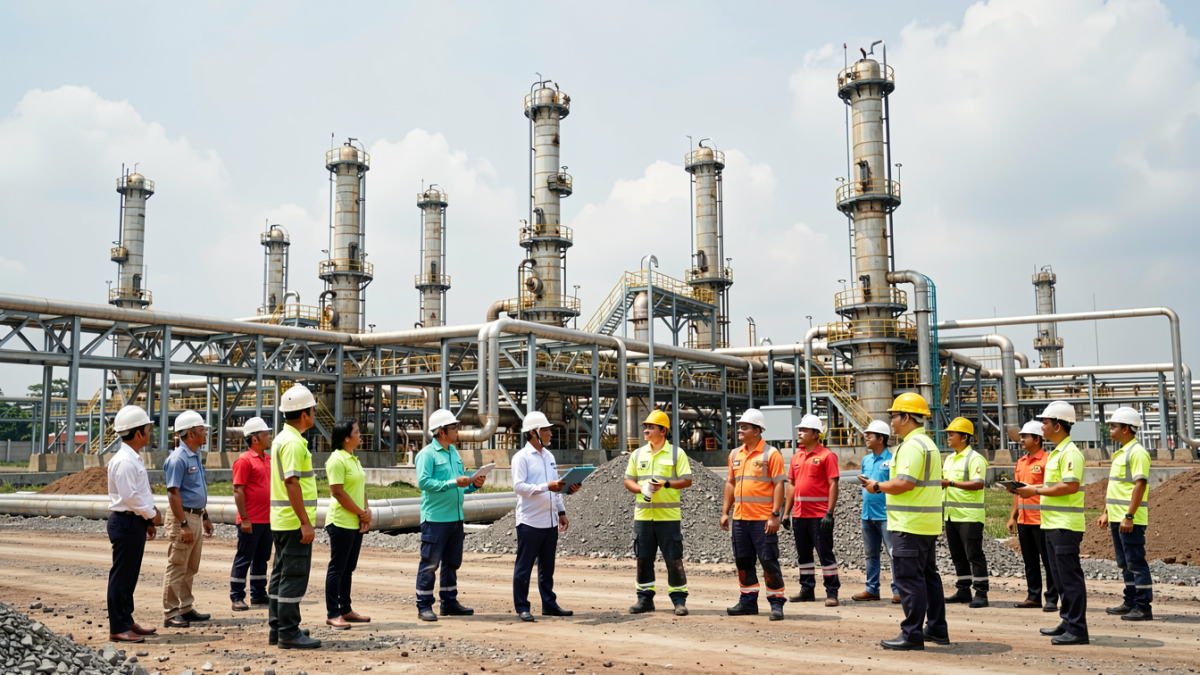
Table of Contents
Bangladesh’s Eastern Refinery Set to Triple Output Under Landmark IsDB Deal
Thebangladaily.com – Bangladesh is on the verge of transforming its domestic fuel-processing landscape through a sweeping modernization of the Eastern Refinery, a move designed to cut the country’s heavy dependence on imported refined petroleum products. Under the plan, the facility’s annual throughput will climb from its current 1.5 million metric tonnes to a full 4.5 million metric tonnes — a threefold increase that would make the plant the backbone of national fuel supply for years to come.
The financial engine behind this expansion is the Islamic Development Bank, which has committed Tk 12,000 crore, equivalent to roughly $1,004.29 million, to fund the project. The arrangement was formalized through a financing agreement titled the “Modernization and Expansion of Eastern Refinery in Bangladesh,” countersigned on Thursday, September 3. The Ministry of Finance confirmed the details publicly on the following Saturday, underscoring the government’s intent to move the project forward without delay.
Who Signed, and Who Watched
The Bangladesh-side signature was applied by Dr Mohammad Mizanur Rahman, Additional Secretary at the Energy and Mineral Resources Division (ERD). Across the table, Anas Eissami, Director General of the IsDB, put his name to the document. The ceremony carried visible political weight: Prime Minister Tarique Rahman attended alongside Dr Muhammad Al Jasser, Group Chairman of the IsDB, lending the occasion the highest level of bilateral attention.
Execution and Institutional Responsibility
Day-to-day implementation of the expansion will fall to the Bangladesh Petroleum Company (BPC), the state-owned enterprise operating under the Energy and Mineral Resources Division. BPC already manages the Eastern Refinery’s existing operations and will absorb the added complexity of scaling throughput by two million metric tonnes per year while integrating newer processing units.
The ERD has characterized this as the single largest investment the IsDB has ever directed into one project within Bangladesh. That distinction matters not only for the bank’s portfolio but for the country’s own capital-planning calculus, since a commitment of this magnitude signals long-term institutional confidence in the project’s viability.
Euro-5 Standards and What They Mean for Consumers
Beyond sheer volume, the modernization package introduces the capability to produce petroleum products meeting the Euro-5 specification. Euro-5 is a European emission standard that caps sulphur content in diesel at 10 parts per million and imposes tighter limits on aromatic hydrocarbons in gasoline. For a market that has historically imported older-grade fuels, the shift to Euro-5-compliant output at home carries several practical consequences:
Domestic vehicles — particularly newer models equipped with catalytic converters and diesel particulate filters — will receive fuel matched to their engineering tolerances, reducing engine wear and extending service intervals. Air-quality regulators gain a domestic lever to tighten vehicle-emission rules without waiting for imported supply to catch up. Export-oriented industries that must meet international product-quality audits also benefit from locally sourced, specification-compliant fuel.
Why the Government Is Pushing This Through
The rationale articulated by the state is straightforward: Bangladesh currently imports a substantial share of its refined petroleum needs, spending foreign exchange that could otherwise service development priorities. Tripling domestic refining capacity directly shrinks that import bill. Each additional million metric tonnes processed at home translates into fewer tanker charters, fewer currency outflows, and a smaller exposure to global price shocks that hit importers first.
Energy security, in the government’s framing, is not merely a question of keeping the lights on. It is a question of strategic autonomy — the ability to sustain industrial output, transport networks, and household energy access even when international supply chains tighten or geopolitical tensions spike crude prices. A refinery running at 4.5 million metric tonnes a year gives the state a buffer that 1.5 million simply cannot.
Broader Context
Bangladesh’s energy mix has long leaned on imported natural gas, coal, and refined petroleum, with domestic gas fields declining in output. The Eastern Refinery, located in Chattogram, sits at the country’s principal deep-sea port, giving it logistical advantages for crude intake that inland facilities lack. Scaling its throughput therefore aligns with existing infrastructure rather than requiring greenfield construction.
The IsDB’s involvement also positions the project within a wider web of multilateral development finance aimed at South Asia’s energy transition. While the bank’s mandate spans member states across the Muslim world, a commitment of this size in a single South Asian project underscores the institution’s appetite for large-ticket infrastructure in the region.
For ordinary consumers, the near-term effect will be gradual: construction, commissioning, and ramp-up phases will span several years before the additional capacity reaches full utilization. Yet the direction of travel is now fixed, and the financial architecture that will carry it there has been put in place.
Related Reading
Frequently Asked Questions
What is Eastern refinery modernization to boost annual?
Eastern refinery modernization to boost annual is the main topic of this guide. The article explains the context, practical details, and next steps readers should understand.
Why does Eastern refinery modernization to boost annual matter?
Eastern refinery modernization to boost annual matters because readers are looking for a useful answer, not just a short summary. Good content should match search intent and help them decide what to do next.