British high commissioner meets information minister
British High Commissioner to Bangladesh Sarah Cook met Information and Broadcasting Minister Andalib Rahman at the ministry on Monday, using the courtesy call

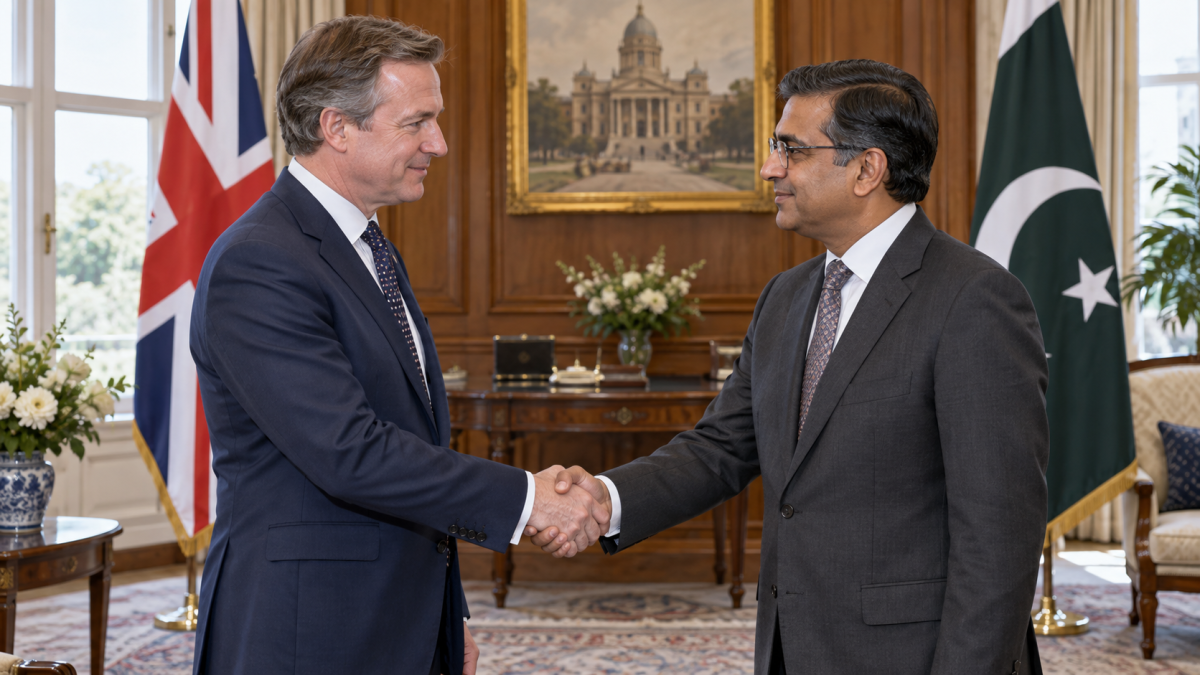
Table of Contents
Bangladesh, UK Discuss Media Freedom and Responsible Information Practices
Thebangladaily.com – British High Commissioner to Bangladesh Sarah Cook met Information and Broadcasting Minister Andalib Rahman at the ministry on Monday, using the courtesy call to exchange views on media freedom, professional journalism and the growing challenge of false information online.
Cook congratulated Andalib Rahman after he assumed his ministerial responsibilities. Their discussions covered areas of shared concern for Bangladesh and the United Kingdom, including how public institutions, news organisations and digital platforms can support access to trustworthy information while protecting freedom of expression.
Commitment to an Independent Media Environment
During the meeting, the information minister said the government remains committed to press freedom and does not intend to place the media under control. He underlined the importance of allowing journalists to express themselves freely, describing a free press as an important part of public communication and accountability.
At the same time, Andalib Rahman pointed to the risks created by misinformation and disinformation. He said people should be protected from inaccurate or deliberately deceptive material, particularly when it is spread through news channels and social media networks.
“Ensuring journalists’ freedom of expression is important, while protecting people from misinformation and disinformation is also crucial.”
The minister also stressed the need for meaningful action against content that is defamatory or misleading. The issue is especially significant in a media landscape where information can circulate rapidly across multiple platforms, often reaching large audiences before claims have been checked or corrected.
Ethics and Verification at the Centre of Discussion
Sarah Cook highlighted that freedom of expression and ethical journalism should advance together. Her remarks placed particular emphasis on fact-checking as a practical way to limit the spread of misinformation and disinformation.
Fact-checking can help readers, viewers and social media users distinguish between verified reporting, opinion, rumours and intentionally misleading claims. It can also encourage greater care before content is published or shared. For journalists, verification remains central to credibility; for audiences, it provides a stronger basis for making informed decisions.
The discussion reflected the wider importance of responsible media practices in an environment where traditional outlets and digital platforms increasingly overlap. News now moves quickly between television, newspapers, websites, messaging services and social networks. That speed can improve public access to information, but it can also make errors and false narratives more difficult to contain.
Potential Cooperation with Ofcom
Cook said there may be room for cooperation between the United Kingdom’s Office of Communications, known as Ofcom, and Bangladesh’s Ministry of Information and Broadcasting. Such engagement could offer an opportunity to exchange views on issues linked to media standards, communication policy and the responsible use of digital platforms.
The possibility of cooperation was raised in the context of shared concerns about online information. While the meeting did not announce a specific programme or agreement, the discussion signalled interest in continued engagement on matters affecting media integrity and the accuracy of public communication.
Ofcom is the UK communications regulator, with responsibilities that include overseeing broadcasting and communications standards. The reference to possible collaboration indicates that Bangladesh and the UK may explore ways to share experience on challenges facing modern media systems.
Balancing Rights and Public Protection
The meeting drew attention to a difficult but important balance: safeguarding the ability of journalists and citizens to speak freely while responding to harmful falsehoods. Measures aimed at countering misleading information need to be effective, but public confidence also depends on ensuring that legitimate reporting, criticism and debate can continue without unnecessary restriction.
For the public, accurate information is essential during everyday decision-making as well as during moments of uncertainty. Misleading reports can cause confusion, damage reputations and weaken trust in institutions and media outlets. Responsible reporting, transparent corrections and careful verification can help reduce those risks.
Journalists also have a central role in this process. Professional standards, clear sourcing, accurate headlines and fair presentation of differing views all contribute to stronger public confidence. In digital spaces, the same principles remain relevant even when content is distributed more quickly and informally than through conventional news formats.
Social media companies, public agencies, media organisations and users each influence the quality of information that circulates online. Readers can play a part by checking claims before sharing them, seeking reliable reporting and remaining cautious about sensational or unverified posts.
Shared Concerns Over Digital Challenges
Beyond media freedom and fact-checking, Cook and Andalib Rahman discussed other matters of mutual interest. These included the pressures created by social media, the need to improve information accuracy and the promotion of responsible practices across the media sector.
The exchange demonstrated that questions surrounding digital communication are not limited to one country or one institution. As online platforms continue to shape public debate, governments and media professionals face common questions about accuracy, ethics, accountability and the protection of free expression.
The meeting between the British high commissioner and Bangladesh’s information minister therefore focused on more than a formal diplomatic call. It highlighted an ongoing policy challenge: creating conditions in which journalism can operate freely and responsibly, while the public is better protected from misleading and harmful information.
Related Reading
Frequently Asked Questions
What is British high commissioner meets information minister?
British high commissioner meets information minister is the main topic of this guide. The article explains the context, practical details, and next steps readers should understand.
Why does British high commissioner meets information minister matter?
British high commissioner meets information minister matters because readers are looking for a useful answer, not just a short summary. Good content should match search intent and help them decide what to do next.