
BNP leader demands Brahmanbaria division with 3 districts
A proposal to create a new administrative division centred on Brahmanbaria has been put forward by Kabir Ahmed Bhuiyan, a member of the Brahmanbaria district

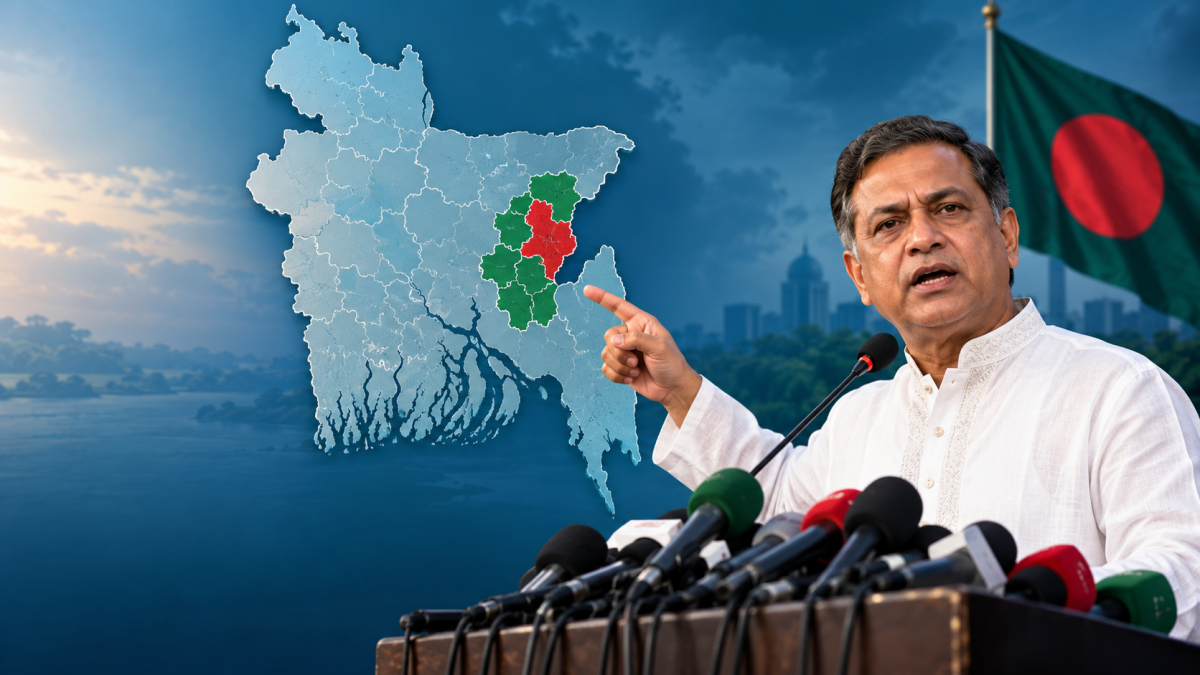
Table of Contents
BNP figure suggests a Brahmanbaria-centred administrative division
Thebangladaily.com – A proposal to create a new administrative division centred on Brahmanbaria has been put forward by Kabir Ahmed Bhuiyan, a member of the Brahmanbaria district BNP. His suggested division would bring together Brahmanbaria, Kishoreganj and Habiganj, with Brahmanbaria serving as the headquarters.
Bhuiyan shared the idea in a Facebook post on Friday, October 30, presenting it as a possible way to strengthen regional development and make government services more accessible for people living in the three districts.
The proposal is not described as an official government initiative or a party decision. Bhuiyan made clear that it reflected his own personal view.
Population and administrative reach
If established in the form proposed, the new division would include an estimated population of about 8.93 million people. It would encompass 31 upazilas across Brahmanbaria, Kishoreganj and Habiganj.
Administrative divisions are significant because they can influence how public administration is organised, where regional offices are located and how residents access government services. A division headquartered closer to residents may be seen as a way to reduce travel time for some people needing to visit regional offices, although any such change would require formal assessment and approval through the relevant authorities.
Bhuiyan’s proposal places Brahmanbaria at the centre of that possible structure. The idea links the three districts through a shared regional framework rather than treating the suggestion as a change affecting only one district.
Economic argument behind the proposal
In outlining his case, Bhuiyan pointed to the area’s agricultural activity, fisheries, gas resources, industry and transport connections. He argued that these assets could provide a foundation for stronger economic growth if the region were administered as a separate division.
Agriculture and fisheries are important considerations in discussions about local economies because they involve production, employment, trade and the movement of goods. Gas resources and industrial activity can also shape the economic profile of an area, while transport links affect how easily people and products can move between districts and wider markets.
The proposal therefore frames a new division as more than an administrative boundary. It presents the suggested arrangement as a potential platform for coordinating development priorities across the three districts. Bhuiyan’s argument is that bringing these areas under one divisional headquarters could help focus attention on their combined resources and service needs.
However, the Facebook post does not set out a detailed implementation plan, a timeline, a budget or a formal administrative process. It also does not indicate that any government body has adopted the idea.
A personal proposal, not an announced policy
Bhuiyan stressed that the plan should be understood as his individual opinion. That distinction matters because the creation of a new administrative division would involve decisions beyond a single political figure or local organisation.
Public discussion of new divisions often raises questions about which districts would be included, where headquarters would be located, how institutions would be arranged and what effect the change could have on public access to services. The proposal involving Brahmanbaria, Kishoreganj and Habiganj introduces those questions for residents and local stakeholders in the three districts.
For supporters, the idea may represent an opportunity to argue for closer regional administration and greater attention to local economic potential. Others may focus on practical considerations, including the need for clear planning, institutional capacity and broad consultation before any administrative restructuring could proceed.
No official action was announced alongside Bhuiyan’s post. At this stage, the proposal remains a personal call for a Brahmanbaria-based division covering three districts and 31 upazilas.
Why the discussion matters
Debates over administrative structures are closely connected to everyday issues such as public service access, regional coordination and development planning. For communities in Brahmanbaria, Kishoreganj and Habiganj, the suggestion puts forward a specific model: a division intended to serve nearly 8.93 million people from a headquarters in Brahmanbaria.
Its future, if any, would depend on whether the proposal gains wider support and enters formal policy discussions. For now, Bhuiyan’s post has added a new idea to the conversation about how the region’s agricultural, fisheries, gas, industrial and transport strengths might be used to support growth and improve service delivery.
Related Reading
Frequently Asked Questions
What is BNP leader demands Brahmanbaria division with 3?
BNP leader demands Brahmanbaria division with 3 is the main topic of this guide. The article explains the context, practical details, and next steps readers should understand.
Why does BNP leader demands Brahmanbaria division with 3 matter?
BNP leader demands Brahmanbaria division with 3 matters because readers are looking for a useful answer, not just a short summary. Good content should match search intent and help them decide what to do next.