
Medical plane crashes in Atlantic, no survivors
A medical evacuation flight bound for Boston ended in tragedy after an aircraft carrying six people crashed into the Atlantic Ocean south of Nantucket. None

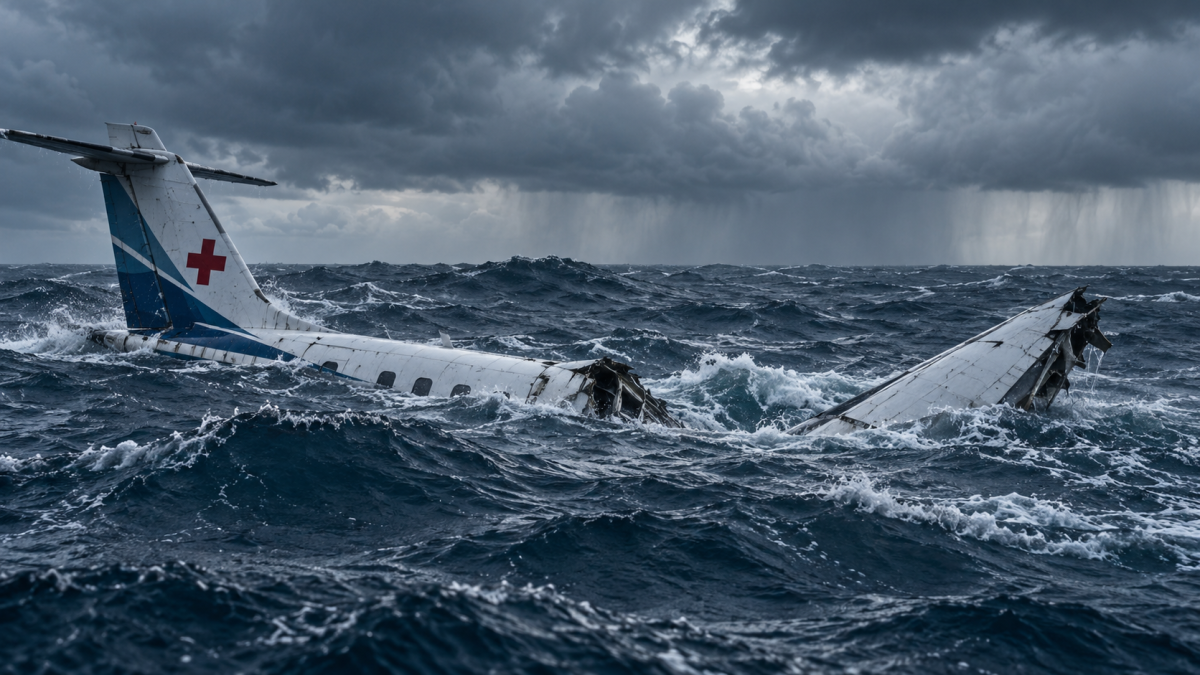
Table of Contents
Six people killed after medical aircraft crashes in Atlantic
Thebangladaily.com – A medical evacuation flight bound for Boston ended in tragedy after an aircraft carrying six people crashed into the Atlantic Ocean south of Nantucket. None of those aboard survived.
The aircraft, operating under the name “Heartbeat 104 Medivac,” had departed Bermuda for Boston Logan International Airport on Saturday, October 3. It was run by Ontario-based Latitude Air Ambulance and was transporting a patient who was travelling for medical care, along with a family member and four members of the medical flight crew.
The flight left LF Wade International Airport in Bermuda but failed to reach its destination. During the journey, the crew notified authorities of an electrical issue. Soon afterward, the plane experienced a major change in altitude before descending rapidly. Its radio contact and tracking signal were then lost.
Wreckage located after lengthy search
The US Coast Guard mounted a large-scale search effort that continued for almost 66 hours. Search teams eventually located a substantial piece of wreckage roughly 20 miles south of Nantucket, an island off the coast of Massachusetts.
Following the discovery, authorities ended the search and recovery operation. The incident has underscored the dangers faced by crews operating long-distance medical flights, where patients, relatives and specialist staff depend on the aircraft to complete an urgent journey safely.
Medical air services play a critical role when a patient requires treatment unavailable in their immediate location or needs to be transferred between hospitals. Such flights often involve highly trained aviation and medical personnel working together in a confined, demanding environment. In this case, the mission included a respiratory therapist and a flight attendant in addition to the cockpit crew.
Victims included Canadian crew and Bermudian passengers
Four of those killed were Canadians employed as part of the Latitude Air Ambulance team. They were pilot Philip Gregory Childerhose, co-pilot Thomas Henry Farquhar, flight attendant Sarah Jane Patton and respiratory therapist Joline Beth Weir.
The remaining victims were Bermudian nationals Marilyn Lavonne Bean, 66, and her son, Sergio Wayne Lottimore, 41. Bean was the patient aboard the flight, while Lottimore was accompanying her during the planned trip to Boston.
The loss has affected communities in both Canada and Bermuda, as well as the wider medical aviation sector. Each mission of this kind relies on a close partnership between pilots, medical staff, patients and families, with every person onboard playing a distinct role in the journey.
Focus turns to the final moments of the flight
The reported electrical problem and the aircraft’s sudden descent are central details in understanding the final stage of the flight. Electrical systems are essential to many functions on an aircraft, including communication, navigation and cockpit instrumentation. However, the available information does not establish the cause of the crash.
Investigations into aviation accidents typically examine the aircraft’s maintenance history, operating conditions, flight path, communications and any recoverable equipment from the wreckage. The sequence of events before contact was lost will be important in determining what happened after the crew alerted others to the electrical difficulty.
The location of the wreckage, south of Nantucket, illustrates the challenge of searches over open water. The Atlantic can present difficult conditions for aircraft and vessels, while debris may be dispersed across a broad area. Even after wreckage is found, recovery work can be complex and limited by weather, sea conditions and the depth of the water.
For the families of the six victims, the end of the search operation marks a painful stage in the aftermath of the disaster. The flight began as a medical transfer intended to bring a patient to care in Boston, but it instead became a fatal incident involving crew members dedicated to emergency air transport and a mother and son travelling together.
The crash serves as a stark reminder of the risks involved in air ambulance operations, particularly on routes that cross large stretches of ocean. While such services provide vital links for patients needing specialised treatment, the people who carry out these missions work in circumstances where rapid decisions, technical reliability and constant coordination are essential.
Related Reading
Frequently Asked Questions
What is Medical plane crashes in Atlantic no survivors?
Medical plane crashes in Atlantic no survivors is the main topic of this guide. The article explains the context, practical details, and next steps readers should understand.
Why does Medical plane crashes in Atlantic no survivors matter?
Medical plane crashes in Atlantic no survivors matters because readers are looking for a useful answer, not just a short summary. Good content should match search intent and help them decide what to do next.