Bangladesh-Japan summit discusses $6.3b investment, 200k jobs
Bangladesh is seeking to deepen its economic partnership with Japan through a potential influx of private investment that could reach 1 trillion yen, or about

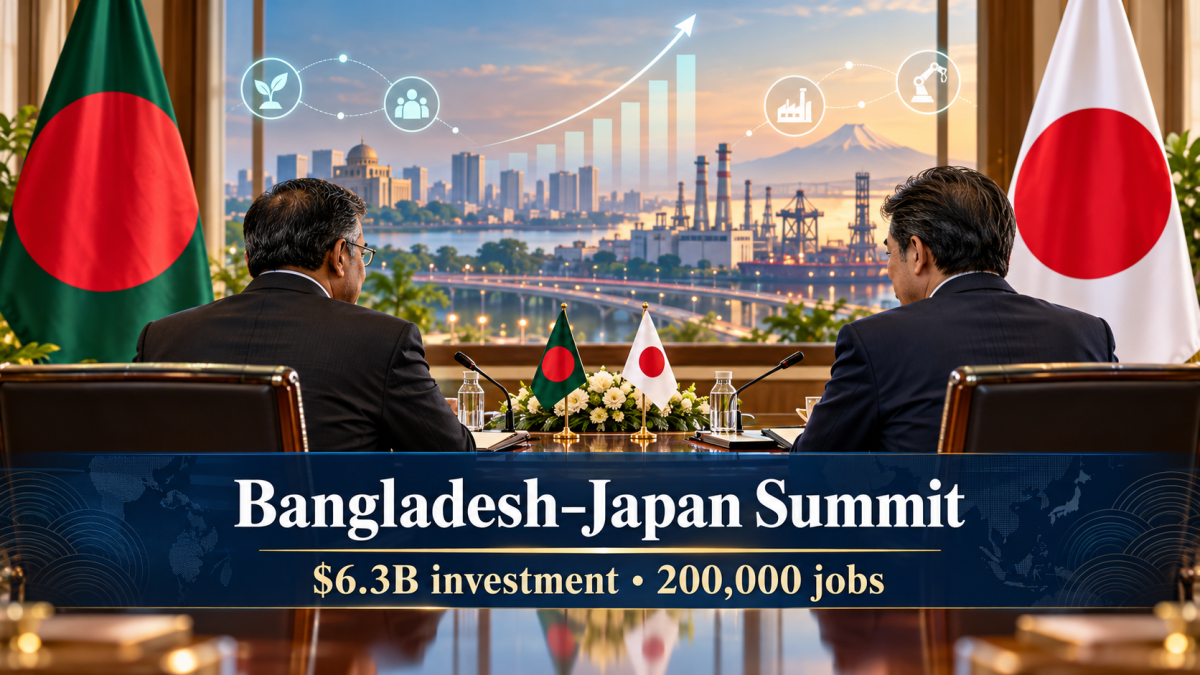
Table of Contents
Bangladesh and Japan Explore Major Investment and Employment Push
Thebangladaily.com – Bangladesh is seeking to deepen its economic partnership with Japan through a potential influx of private investment that could reach 1 trillion yen, or about $6.3 billion, over the next five years. The proposed investment, discussed during Prime Minister Tarique Rahman’s meeting with Japanese Prime Minister Sanae Takaichi on Tuesday, October 27, could support the creation of nearly 200,000 jobs in Bangladesh.
The bilateral summit took place during Rahman’s four-day official visit to Japan and focused on moving the countries’ strategic partnership toward practical economic outcomes. Trade expansion, energy security, technology, transport links and wider regional cooperation were among the central themes of the discussions.
For Bangladesh, the prospect of substantial Japanese private-sector participation carries particular importance because it could strengthen industrial capacity while opening employment opportunities for younger workers. Rahman said the anticipated investment could speed up industrialisation, expand manufacturing and help build a more resilient economy through investment, innovation and infrastructure.
Energy support and industrial development
Energy security was a major item on the agenda. The two sides discussed an emergency financial assistance package worth 50 billion yen, approximately $320 million, under Japan’s Partnership for Power Asia initiative. Reliable energy supplies remain essential for industrial production, investment planning and the development of modern transport and technology systems.
The summit also reinforced support for the Bay of Bengal Industrial Growth Belt, widely known as BIG-B. The initiative is intended to promote coordinated development in areas including energy, deep-sea ports, industrial facilities, technology and regional transport connections.
Its broader significance lies in Bangladesh’s geographic position between South and Southeast Asia. Improvements in ports, logistics and transport infrastructure could help the country strengthen its role as a regional bridge, while also supporting domestic businesses that depend on efficient movement of goods and access to power.
Technology cooperation on the agenda
Rahman proposed the establishment of a dedicated Bangladesh-Japan Tech Park to encourage collaboration in artificial intelligence, cloud computing, robotics and electronics manufacturing. The proposal reflects a push to link Bangladesh’s workforce and industrial ambitions with advanced technology sectors in which Japanese companies have extensive experience.
Cooperation in these fields could contribute to new forms of skills development and production capacity. Electronics manufacturing, automation and cloud-based services all depend on reliable infrastructure, technical expertise and long-term investment, making the proposed technology partnership relevant to the wider economic agenda discussed at the summit.
The prime minister also requested Japanese technical and financial support for space science, satellite engineering and a high-speed rail system connecting six major divisional cities in Bangladesh. Such projects would require sustained planning and implementation, but they illustrate the breadth of the infrastructure and innovation agenda being considered by the two governments.
Economic agreement and institutional coordination
Another key issue was the early implementation of the Bangladesh-Japan Economic Partnership Agreement, or EPA. The leaders also discussed strengthening institutional cooperation and creating a joint ministerial commission to convert shared objectives into measurable progress.
An EPA can provide a framework for closer commercial engagement by addressing issues important to trade and investment. For Bangladesh, rapid progress on the agreement could help provide greater certainty for businesses considering longer-term partnerships, production facilities or supply-chain investments.
Rahman described the visit as a historic moment in the relationship between the two countries. He pointed to the long-standing friendship between Bangladesh and Japan, characterising it as a relationship grounded in mutual respect and confidence.
He also recalled the role of his late father, President Ziaur Rahman, in developing bilateral relations, as well as later engagements by his late mother, former Prime Minister Begum Khaleda Zia. These earlier connections formed part of the historical foundation referenced during the visit.
Shared regional and democratic priorities
During their meeting, Rahman and Takaichi reaffirmed their commitment to democracy, the rule of law, economic progress and a peaceful, stable and prosperous Indo-Pacific region. The discussion linked bilateral economic cooperation with a wider interest in regional stability and connectivity.
Rahman said his government remains committed to developing a stronger economy after democratic elections, with investment, innovation and infrastructure forming major pillars of that effort. The proposed Japanese investment and project cooperation would therefore be assessed not only by their headline value, but also by their capacity to generate durable jobs and strengthen productive sectors.
The prime minister also thanked Japan for its continued humanitarian support for displaced Rohingya people. He requested that Tokyo maintain active diplomatic engagement aimed at enabling their voluntary, safe, dignified and sustainable return to Myanmar.
Japan was among the first countries to recognise Bangladesh after its independence. Rahman expressed appreciation to the Japanese government and people for their hospitality and enduring friendship, while the summit highlighted both countries’ interest in translating that relationship into expanded economic and technological cooperation.
Related Reading
Frequently Asked Questions
What is Bangladesh Japan summit discusses 6 3b investment?
Bangladesh Japan summit discusses 6 3b investment is the main topic of this guide. The article explains the context, practical details, and next steps readers should understand.
Why does Bangladesh Japan summit discusses 6 3b investment matter?
Bangladesh Japan summit discusses 6 3b investment matters because readers are looking for a useful answer, not just a short summary. Good content should match search intent and help them decide what to do next.