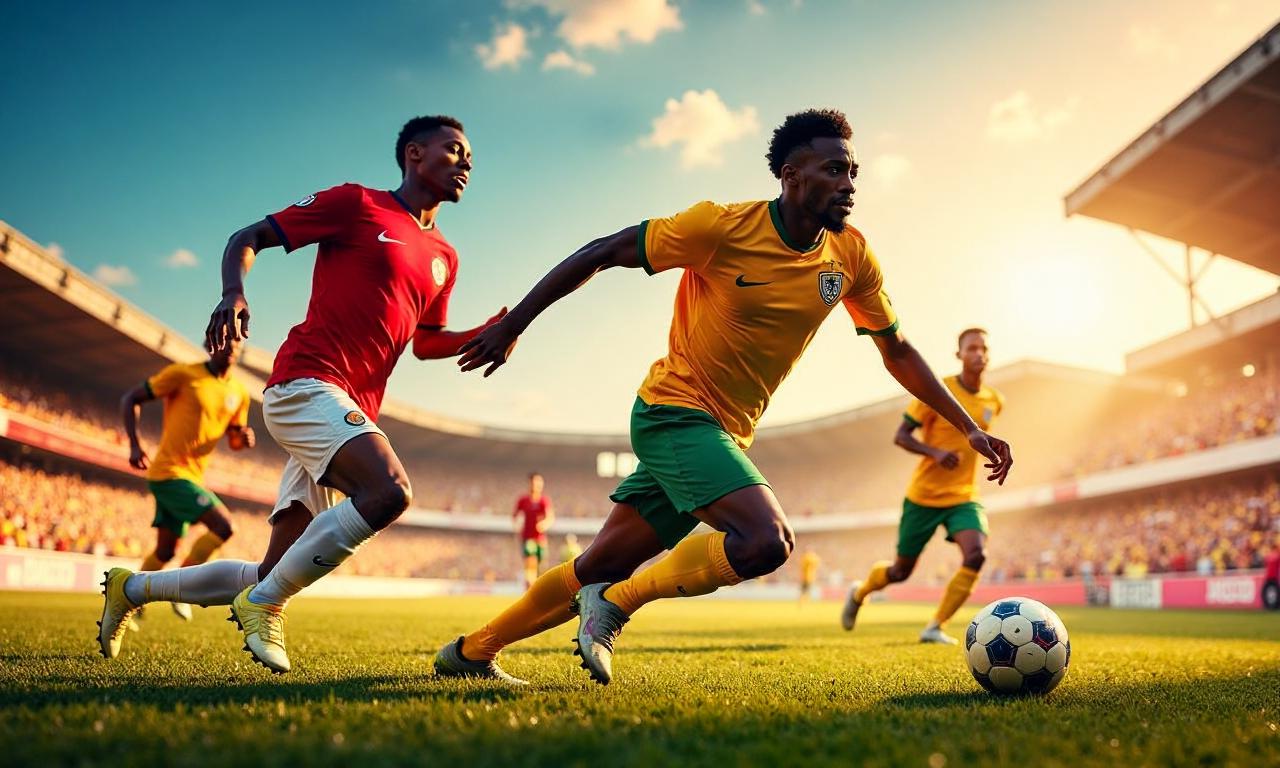
Why age does not catch up with Messi
Why age does not catch up: es not catch up - In a stunning display of skill and composure, Lionel Messi defied expectations once again, securing two goals in


Why Age Does Not Catch Up With Messi
Thebangladaily.com – In a stunning display of skill and composure, Lionel Messi defied expectations once again, securing two goals in Argentina’s clash with Austria to extend his World Cup scoring record. Despite Ralf Rangnick’s tactical plan to neutralize the Barcelona legend, the 39-year-old forward continued to thrive, showcasing his enduring influence on the pitch.
Austria’s Coach and Messi’s Legacy
Rangnick, who previously coached at Manchester United, brought a wealth of experience to the Austrian team. At 67, he remains a respected figure in football, having revitalized the squad since taking charge in 2022. Their 3-1 victory over Jordan marked the start of their World Cup campaign in North America, but the real test came against Argentina, the reigning champions.
“Lionel Messi may not be as physically aggressive as before,” Rangnick noted. “He prefers to position himself strategically, often in offside areas. This doesn’t reduce his threat, but it requires us to manage our defensive transitions carefully.”
Rangnick emphasized the need for vigilance, highlighting how Messi’s ability to create space makes him a constant danger. His insights proved prescient as the match unfolded, with Argentina’s star striker seizing key moments to etch his name into history.
Messi’s Mastery in the Final Stages
The game’s turning point arrived in the 38th minute when Messi, set up by Facundo Medina, calmly slotted home a goal. His calmness under pressure, a hallmark of his career, left the Austrian defenders scrambling. The maestro added a second in the closing moments of extra time, cementing his status as the tournament’s top scorer.
Despite the early penalty miss that frustrated the crowd, Messi’s determination was evident. The 70,000 fans in light blue and white cheered him on as he navigated the game’s challenges, with Austria’s David Alaba failing to stop his two-goal performance.
“Messi was visibly upset after missing that penalty,” said the Argentine captain. “But his ability to recover and deliver in critical moments is what sets him apart.”
Argentine coach Lionel Scaloni, a former teammate of Messi at the 2006 World Cup, praised the forward’s adaptability. “Even when the team struggled to maintain possession, Messi stepped up with the work,” Scaloni remarked. “His commitment speaks volumes about his character.”
A New Era for the Legend
Renowned journalist Guillem Balague, who chronicled Messi’s journey in his biography, described the current iteration of the player as a marked evolution. “Messi has redefined himself multiple times to remain dominant,” Balague wrote. “He’s now a master of efficiency, conserving energy for decisive plays.”
“Critics once questioned his lack of physicality,” Balague added. “But now it’s seen as a strategic advantage. He reads the game with precision, adapting to the demands of the tournament.”
Balague also referenced Pablo Aimar’s observation that “the final version of Messi is always the greatest.” This sentiment resonates as the player, now in his sixth World Cup, continues to prove that age is no barrier to excellence. His hat-trick against Algeria and subsequent goals against Austria underscore his timeless brilliance, solidifying his place as a football icon.