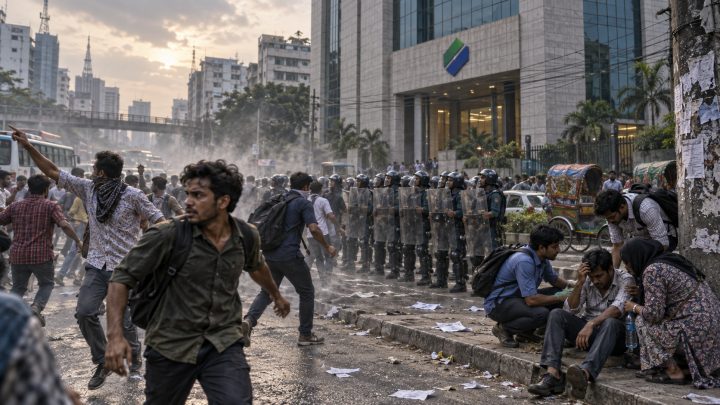
West Bengal imposes fine on spitting, public urination
Beginning Tuesday, residents and visitors across West Bengal's cities face monetary penalties for behaviors long tolerated on Indian streets: spitting

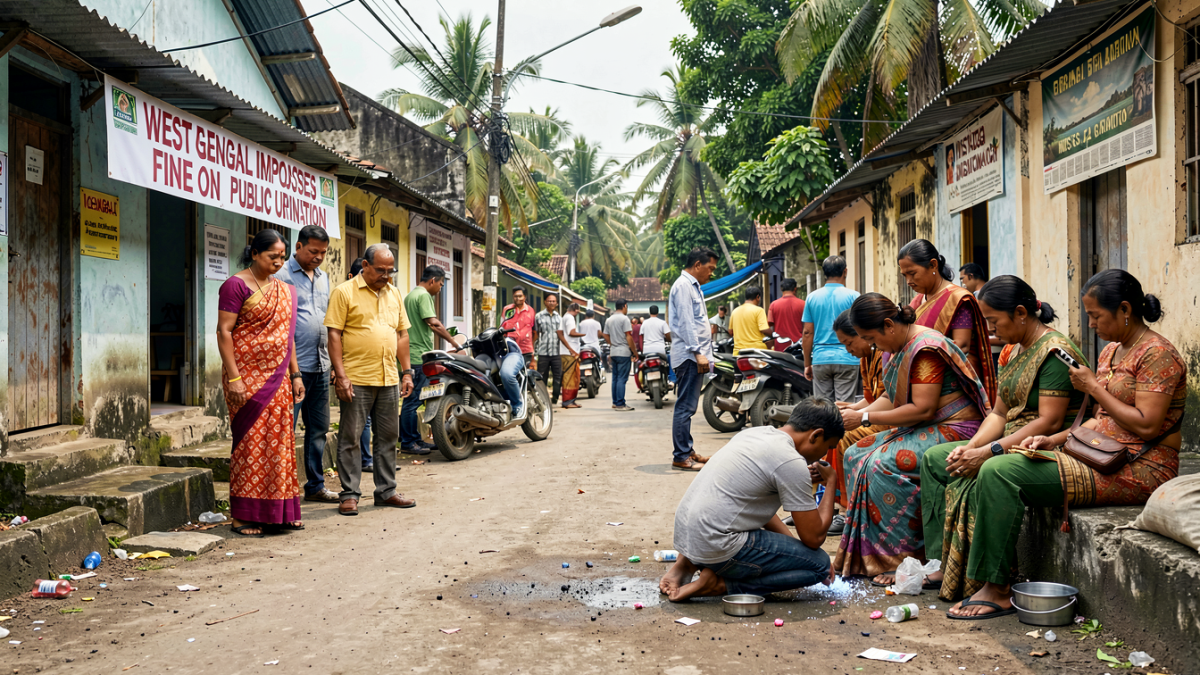
Table of Contents
New Penalty Regime Targets Everyday Habits in West Bengal’s Urban Spaces
Thebangladaily.com – Beginning Tuesday, residents and visitors across West Bengal’s cities face monetary penalties for behaviors long tolerated on Indian streets: spitting, relieving oneself in public, defecating outdoors, and随手 discarding waste. The state government rolled out the revised penalty schedule with the stated aim of reshaping civic conduct and restoring basic hygiene to municipal thoroughfares. The move arrives amid persistent public-health concerns about open defecation, a problem that continues to affect millions across the country despite years of sanitation campaigns.
What the Fines Cover
The updated rules assign a 100-rupee penalty to anyone caught spitting on roads or public walkways. A higher charge of 200 rupees applies to public urination, open defecation, and littering. Separately, carrying or using single-use plastic bags thinner than 125 microns also triggers the same 200-rupee fine, linking the sanitation drive to the broader push against microplastic pollution in urban ecosystems.
The penalties are not entirely new in statute. West Bengal’s amended Municipal Act of 2019 already contained provisions allowing fines of up to 1,000 rupees for spitting and littering. What distinguishes the current enforcement push is the government’s explicit commitment to active, on-the-ground implementation rather than leaving the clauses dormant on paper. Whether this iteration will succeed where earlier attempts faltered remains an open question for observers of Indian municipal governance.
Official Framing: Behavior Over Revenue
Urban Development and Municipal Affairs Minister Agnimitra Paul framed the initiative as a civic-education exercise first and a revenue measure second. In her public remarks, she stressed that the ultimate objective is not filling municipal coffers through ticket-issuance but cultivating a sense of shared responsibility among residents.
“Raising awareness and fostering civic responsibility take priority over collecting fines,” Paul stated, adding that transforming Kolkata and other urban centers into cleaner cities requires active public cooperation alongside government efforts.
The minister specifically called on commuters to stop ejecting waste from vehicle windows and to refrain from spitting while riding buses. She expressed confidence that observable shifts in street-level behavior could materialize within twelve months, provided the public internalizes the norms rather than treating them as periodic awareness-campaign slogans.
The Open-Defecation Backdrop
The timing of the new rules intersects with sobering global data. Joint estimates from the World Health Organization, UNICEF, and the World Bank place the share of Indians still practicing open defecation at roughly 6.7 to 11 per cent of the population. Rural districts report markedly higher rates than metropolitan areas, where infrastructure gaps—insufficient public toilets, poor drainage, and limited waste-collection coverage—keep the problem alive even in formally urbanized zones.
For West Bengal’s cities, the statistic translates into visible filth around railway platforms, market perimeters, and arterial roads. Municipal authorities acknowledge that adequate public restrooms and waste receptacles have not yet been deployed uniformly across every ward. Installation of bins and sanitation amenities is currently underway near high-traffic markets and railway stations, but full coverage remains a work in progress.
Plastic-Bag Phase-Out and the Vending-Machine Plan
A distinctive element of the new package targets the thin, single-use plastic bags ubiquitous in Indian retail. To accelerate their disappearance, the government intends to place vending machines inside markets that dispense cornstarch-based bags at one rupee each and reusable cloth bags at five to ten rupees. The pricing is deliberately set below the cost of a typical plastic bag to make the switch economically frictionless for shoppers.
For households, the minister clarified that municipal waste bins will not be installed in residential lanes. Instead, residents are expected to segregate their refuse into two separate bags—one for wet, biodegradable waste and one for dry, recyclable material—so that sanitation workers can sort and process streams efficiently at collection points.
Enforcement Realities and Reader Context
Indian cities have a long history of announcing anti-littering and anti-spitting rules that gather dust in municipal gazettes. Kolkata’s own Municipal Act amendments have sat largely unenforced for years, partly because of limited municipal staffing, weak surveillance infrastructure, and a cultural norm that treats public space as a commons free of individual accountability. The current administration’s stated expectation of visible change within a year therefore carries an implicit bet on sustained political will, adequate enforcement manpower, and genuine public buy-in.
For the average resident, the practical takeaway is straightforward: a 100- or 200-rupee ticket is now a realistic possibility for habits that previously carried only social disapproval. Whether the fine schedule functions as a nudge toward cleaner streets or becomes another symbolic gesture will depend less on the text of the regulation than on the consistency with which ward officers, traffic police, and market inspectors apply it over the coming months.
Related Reading
Frequently Asked Questions
What is West Bengal imposes fine on spitting?
West Bengal imposes fine on spitting is the main topic of this guide. The article explains the context, practical details, and next steps readers should understand.
Why does West Bengal imposes fine on spitting matter?
West Bengal imposes fine on spitting matters because readers are looking for a useful answer, not just a short summary. Good content should match search intent and help them decide what to do next.