Oil tankers attacked in Hormuz strait: UK maritime agency
Commercial shipping near the Strait of Hormuz faced renewed danger on Friday after two crude oil tankers were hit by projectiles in separate incidents

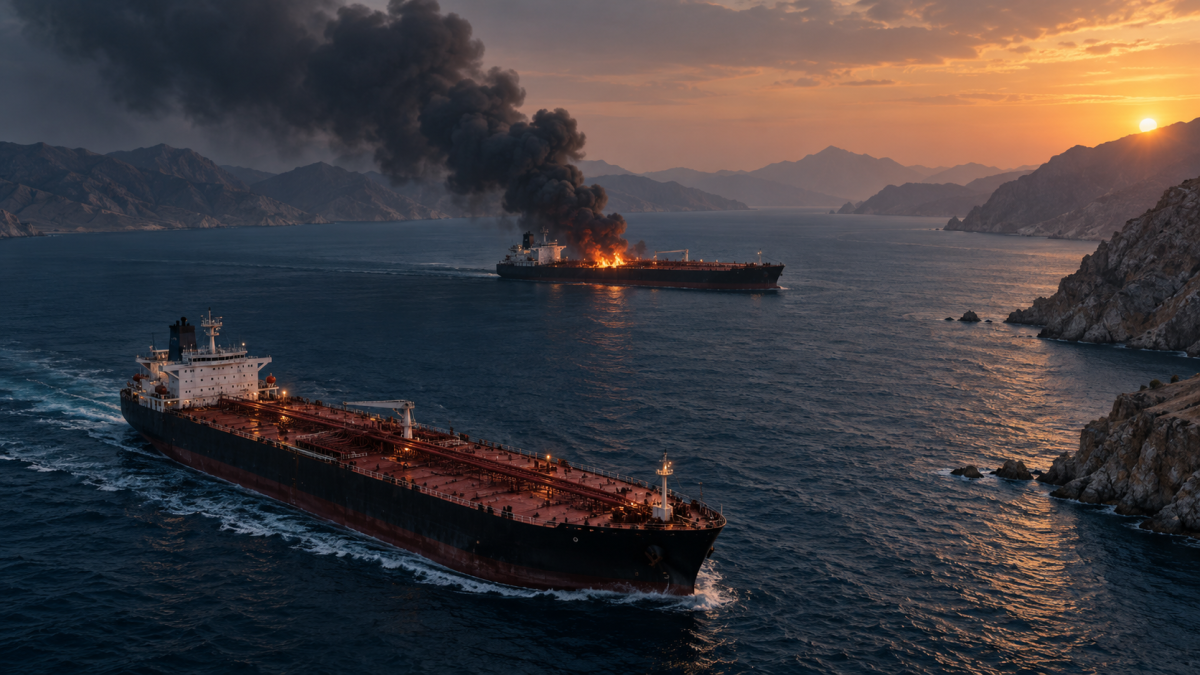
Table of Contents
Projectiles Hit Two Oil Tankers Near Strait of Hormuz
Thebangladaily.com – Commercial shipping near the Strait of Hormuz faced renewed danger on Friday after two crude oil tankers were hit by projectiles in separate incidents, underscoring the risks confronting vessels operating around one of the world’s most strategically important energy corridors.
The UK Maritime Trade Operations agency said the first tanker was struck while leaving the Strait of Hormuz region. The impact triggered a limited fire and caused a loss of power aboard the vessel, though the blaze was later put out.
“A small fire and blackout onboard”
No injuries were recorded in that incident, and there was no reported environmental damage. The ship was able to continue its voyage after the fire was extinguished. UKMTO did not identify the tanker or disclose its departure point and intended destination.
Second tanker struck east of Oman
Several hours later, a second oil tanker sent an alert after being hit by what was described as an unknown projectile in waters east of Oman. All crew members were safe, and no pollution or other environmental impact was reported.
Authorities are examining both incidents. The identity of those responsible and the type of projectiles involved had not been established in the information released on Friday.
The attacks add to mounting concerns for merchant vessels moving through the waters around the Strait of Hormuz, the narrow passage linking the Persian Gulf with the Gulf of Oman and the wider Arabian Sea. The route is central to global energy trade because large volumes of crude oil and liquefied natural gas normally travel through it.
A vital route caught in a widening conflict
Before the United States and Israel launched strikes against Iran in late February, roughly one-fifth of the world’s oil and LNG shipments passed through the Hormuz corridor. Its role in connecting major Gulf producers to international customers means any interruption can have consequences far beyond the immediate area.
The passage has remained a focal point of the wider Middle East conflict. Tehran has been blocking commercial ships and firing on vessels it says crossed without authorization. In response, Washington imposed a counterblockade targeting Iranian ports in an effort to stop Iran from exporting oil.
That confrontation has made maritime safety a central concern for shipping operators, crews, insurers and energy markets. Tankers traveling through the area must navigate not only a narrow waterway but also an environment shaped by military activity, competing restrictions and the possibility of sudden attacks.
The latest incidents illustrate how quickly risks can emerge even when a vessel is already moving away from the strait. In the first case, the tanker was exiting the passage when it was struck. The second event, east of Oman, showed that the danger may extend beyond the strait itself into nearby waters used by ships heading toward or away from the Gulf.
Immediate safety and environmental concerns
For vessels carrying crude oil, even a relatively small strike can create urgent operational challenges. A fire or blackout may affect navigation, communications, propulsion or onboard safety systems. Crews must first protect lives, control any fire and assess whether the ship can safely continue.
The absence of casualties in both Friday incidents is significant, as is the lack of reported environmental harm. A damaged tanker can raise fears of an oil spill, particularly in busy and environmentally sensitive waters. No such impact was identified in either case.
The first vessel’s ability to resume its journey suggests that the immediate damage did not prevent it from sailing. Still, the incidents are likely to reinforce concerns about the security conditions facing civilian shipping in the region.
Pressure on commercial shipping
Shipping disruptions in Hormuz can affect more than the vessels directly involved. Delays, diversions, heightened security measures and uncertainty over access can complicate the movement of energy supplies. Because the route is difficult to replace at the same scale, instability there attracts close attention from governments and markets worldwide.
Commercial crews are also exposed to risks that are outside their control. Tankers carry cargoes essential to international trade, but their crews can find themselves operating near active disputes between states. Friday’s events again highlighted the vulnerability of civilian maritime traffic when regional tensions intensify.
With investigations underway, further details may clarify the circumstances surrounding both strikes. For now, the two tanker incidents serve as another warning that the waters around the Strait of Hormuz remain highly volatile, with shipping security closely tied to the broader conflict between Iran, the United States and Israel.
Related Reading
Frequently Asked Questions
What is Oil tankers attacked in Hormuz strait?
Oil tankers attacked in Hormuz strait is the main topic of this guide. The article explains the context, practical details, and next steps readers should understand.
Why does Oil tankers attacked in Hormuz strait matter?
Oil tankers attacked in Hormuz strait matters because readers are looking for a useful answer, not just a short summary. Good content should match search intent and help them decide what to do next.