
Oil prices rise above $107 amid Middle East tensions
Concerns over crude supply security pushed international oil prices sharply higher on Thursday, with Brent crude moving beyond $107 a barrel as fighting and

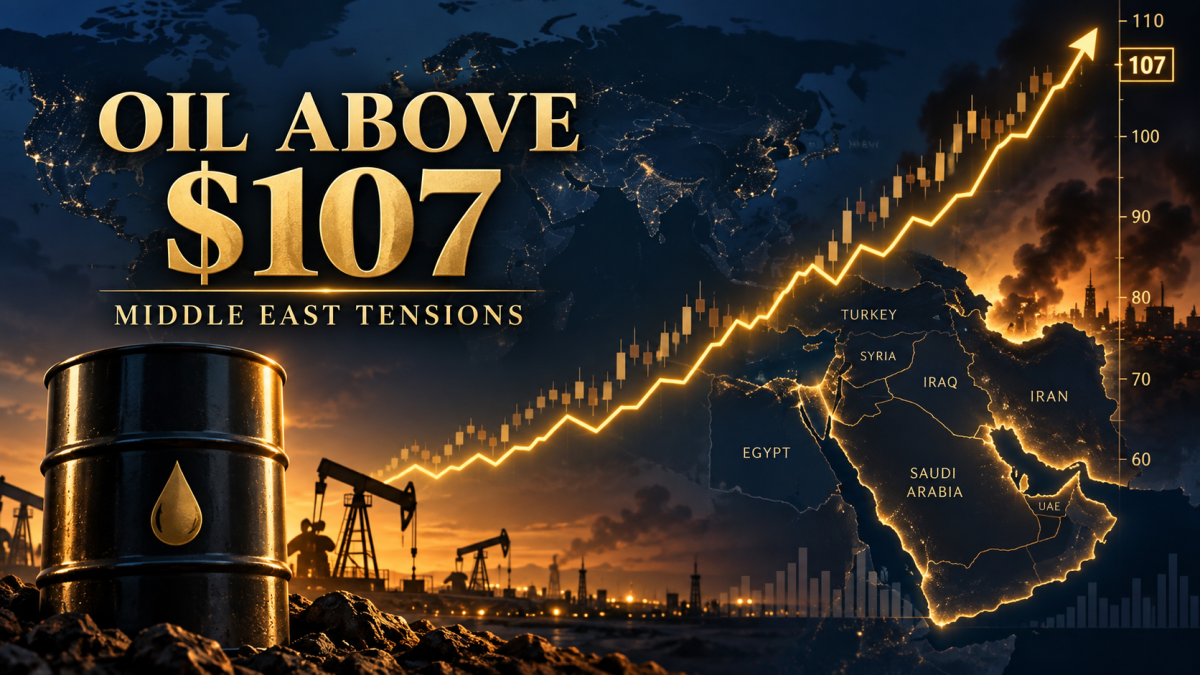
Table of Contents
Oil Market Jumps as Key Maritime Routes Face New Pressure
Thebangladaily.com – Concerns over crude supply security pushed international oil prices sharply higher on Thursday, with Brent crude moving beyond $107 a barrel as fighting and shipping risks intensified across the Middle East.
Brent, the main global pricing benchmark, closed at $107.63 per barrel after gaining 6.34 per cent. The move marked its highest level since May 19. US West Texas Intermediate crude also recorded a strong advance, climbing 6.69 per cent to $102.48 a barrel, its highest point since May.
The rise reflects growing anxiety that conflict near major waterways could interfere with the movement of oil and other cargoes. Energy markets are particularly sensitive to developments around narrow sea passages because a disruption in one location can affect shipping schedules, insurance costs, freight rates and the availability of supplies far beyond the immediate region.
Strategic Straits Draw Market Attention
Tensions increased after Iran-aligned Houthi rebels seized Yemen’s port city of Mocha. At the same time, attacks on vessels in and near the Bab el-Mandeb Strait and the Strait of Hormuz heightened fears that the conflict could place further strain on oil transport routes.
The Bab el-Mandeb Strait sits between Yemen on the Arabian Peninsula and the Horn of Africa. It connects the Red Sea with the Gulf of Aden and is an important passage for ships travelling between Asia, Europe and the Mediterranean. Any threat to commercial traffic in this area can force shipping companies to reassess routes, potentially adding time and expense to deliveries.
The Strait of Hormuz is another critical corridor for global energy trade. Located between Iran and Oman, it links the Persian Gulf to the Gulf of Oman and the wider Arabian Sea. Its importance means that security concerns there are closely watched by oil traders, governments and businesses dependent on imported fuel.
Even when physical supply losses have not been confirmed, the possibility of interruptions can lift prices quickly. Oil markets tend to build in a risk premium when traders believe production, storage facilities, ports or shipping lanes may become harder to access.
Why Price Moves Matter Beyond Trading Floors
Higher crude prices can eventually influence the cost of petrol, diesel, aviation fuel and transport. The effect is not always immediate, as retail prices depend on local taxes, currency movements, refining costs, government policies and existing inventories. Still, a sustained increase in crude can raise pressure on fuel importers and businesses that rely heavily on transportation.
For consumers, the impact may appear through higher logistics costs for goods moved by road, sea or air. Manufacturers and retailers can also face increased expenses if energy or fuel is a major part of their operations. The degree of any effect varies widely from country to country.
Oil prices are shaped by more than geopolitical events. Production decisions, refinery activity, global economic demand, weather conditions, inventory levels and currency changes can all influence daily trading. In periods of conflict, however, concern about the safety of supply routes can become a dominant factor.
The sharp moves in both Brent and WTI showed that traders were reacting not only to events on land but also to the risk surrounding maritime transport. Brent is widely used to price oil traded internationally, while WTI is a major US benchmark. When both rise strongly on the same day, it can signal broad concern across the energy market.
Uncertainty Remains the Central Issue
Attention will remain focused on whether attacks around the Bab el-Mandeb and Hormuz straits continue, expand or lead to wider disruptions for commercial shipping. The market response in the coming days is likely to depend on developments affecting vessel movements, port operations and confidence in the flow of oil through the region.
For now, the advance above $107 for Brent and above $102 for WTI underlines how rapidly energy prices can react when conflict threatens strategic transport corridors. The situation has renewed focus on the vulnerability of global supply chains to instability in a region central to the world’s oil trade.
Related Reading
Frequently Asked Questions
What is Oil prices rise above 107 amid?
Oil prices rise above 107 amid is the main topic of this guide. The article explains the context, practical details, and next steps readers should understand.
Why does Oil prices rise above 107 amid matter?
Oil prices rise above 107 amid matters because readers are looking for a useful answer, not just a short summary. Good content should match search intent and help them decide what to do next.