One-week ultimatum to deliver justice for Zakaria’s murder
A large human chain at Satkhira New Market has intensified public pressure for the arrest of all suspects in the killing of college student Zakaria, with


Table of Contents
Satkhira residents demand swift action in Zakaria murder case
Thebangladaily.com – A large human chain at Satkhira New Market has intensified public pressure for the arrest of all suspects in the killing of college student Zakaria, with organisers giving police one week to demonstrate visible progress in the case.
Participants gathered at the market premises to call for justice and express frustration that, nearly a week and a half after the fatal stabbing, several accused persons had not yet been detained. The programme was chaired by Advocate Azad Hossain Belal, adviser to the Zakaria Murder Justice Implementation Committee, while Sheikh Masum Billah Shahin, the committee’s member secretary, conducted the event.
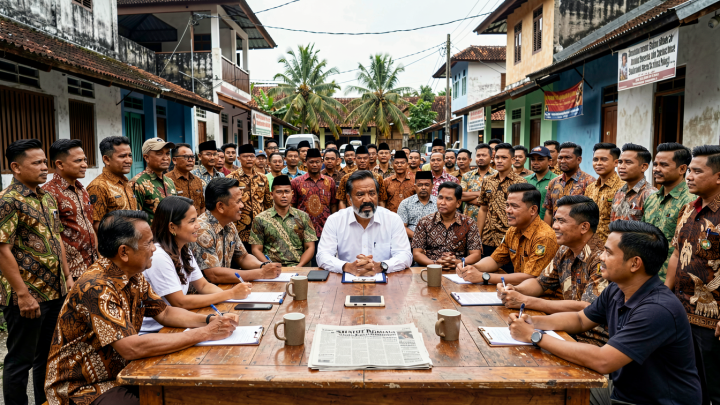
The demonstration brought together community representatives, lawyers, students and labour leaders. Their central demand was straightforward: police should promptly locate and arrest everyone accused in connection with Zakaria’s death.
Concern over pace of arrests
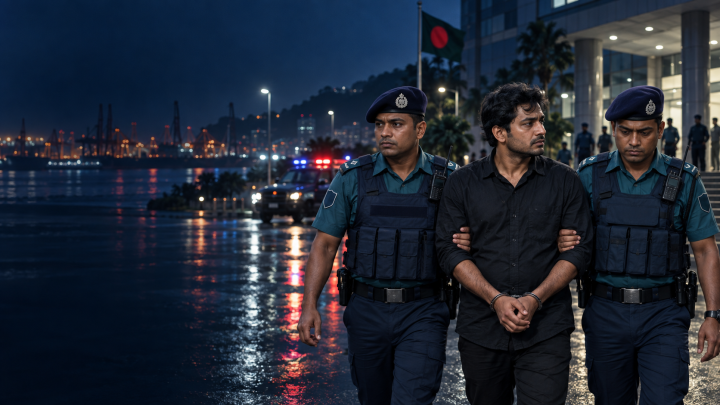
Speakers at the gathering said the response from law enforcement had fallen short of public expectations. Although police have arrested three people in the case, including the main suspect Nahid, those addressing the crowd argued that the remaining accused must also be brought before the law without delay.
They maintained that the arrest of Nahid should not be viewed as sufficient progress, stressing that investigators still have a responsibility to pursue every person named in the case as well as those who remain unidentified. For the family, friends and residents following the case, arrests are an early but important part of a longer process that includes investigation, evidence collection and eventual court proceedings.
Police must show their capability by arresting the other accused immediately; otherwise, a strong street movement involving people across the district will be launched.
The warning reflected growing concern that unresolved violence can leave families and communities feeling unprotected. Organisers said their demand was for accountability through lawful action, with the case moving forward in a manner that gives the victim’s family confidence that no suspect will be overlooked.
How the incident unfolded
The killing followed an altercation late on Friday, October 2. At approximately 11:30pm, a dispute developed involving members of a teenage gang, including Nahid, and Bappi Hasan. Bappi is the nephew of Rabiul Islam, who owns a tea stall near the main gate of the District Livestock Officer’s office.
Zakaria, a college student, intervened when Bappi Hasan was in danger. During the confrontation, Nahid allegedly stabbed Zakaria. He was taken for medical treatment but later died from his injuries at the hospital.
The incident has resonated strongly because Zakaria was injured while trying to assist another person. Those who joined the human chain portrayed his death as a reminder of the devastating consequences that can follow street-level confrontations involving young people. Their message was that serious violence must receive a serious and timely institutional response.
Case filed with multiple accused
On Saturday night following the incident, Zakaria’s brother Shahariar Khan filed a murder case with Satkhira Sadar Police Station. The complaint named 12 individuals and also referred to seven unidentified accused persons.
The inclusion of both named and unknown suspects means the investigation must address a broad set of allegations. Identifying people whose names were not initially known can require investigators to review witness accounts and establish who was present or involved during the confrontation. The human-chain organisers urged police to handle that work with urgency while ensuring that the legal process remains based on evidence.
Police have so far detained three people in connection with the case, including Nahid, identified as the principal suspect. The public demand at the New Market event was not limited to the number of arrests already made; speakers repeatedly focused on the need to find the remaining accused and ensure that the investigation does not lose momentum.
A call for justice and public confidence
Among those speaking were joint conveners Professor Nur Mohammad Par, Abul Kasem, Advocate Akbar Hossain, Advocate Shafiqul Islam, Mashiur Rahman and Kamruzzaman Russell. Student leaders Sheikh Abu Raihan, Md. Nurunnabi and Al Imran Imu also addressed the programme, along with labour representatives Aziz Babu, Nawabjan and Oziar Rahman.
The range of participants underlined that the campaign has drawn support beyond a single group. Lawyers, students, workers and local residents used the gathering to convey a shared expectation that the case should be pursued transparently and without unnecessary delay.
For a murder victim’s family, the period immediately after a killing can be especially difficult: grief is compounded by uncertainty over whether those accused will be located and whether the investigation will move quickly enough. Public demonstrations often emerge from that uncertainty, seeking to keep attention on the victim and reinforce demands for due process.
The organisers have now set a one-week expectation for stronger action. Whether further demonstrations take place will depend on what progress is seen in locating the outstanding suspects. For now, the human chain has placed Zakaria’s killing at the centre of public discussion in Satkhira, with residents calling for a complete investigation and justice for a student whose attempt to help another person ended in tragedy.
Related Reading
Frequently Asked Questions
What is One week ultimatum to deliver justice?
One week ultimatum to deliver justice is the main topic of this guide. The article explains the context, practical details, and next steps readers should understand.
Why does One week ultimatum to deliver justice matter?
One week ultimatum to deliver justice matters because readers are looking for a useful answer, not just a short summary. Good content should match search intent and help them decide what to do next.