14pc quota proposed for govt school admissions
Government secondary school admissions for the 2027 academic year could include a 14 percent quota system covering six groups of applicants, under a draft

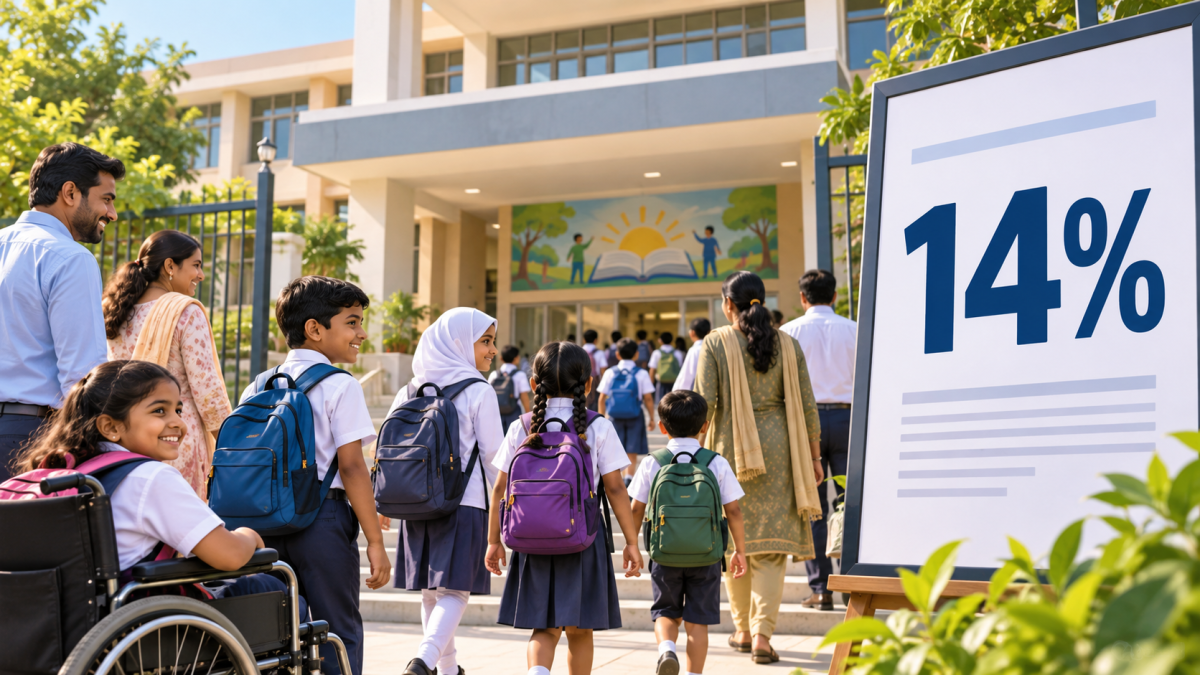
Table of Contents
Draft policy proposes 14% reserved seats in government secondary schools for 2027
Thebangladaily.com – Government secondary school admissions for the 2027 academic year could include a 14 percent quota system covering six groups of applicants, under a draft policy now awaiting approval from the Education Ministry.
The Directorate of Secondary and Higher Education (DSHE) has prepared the proposed admission rules and sent them to the ministry for consideration. If approved, the policy would shape how a portion of seats is allocated at government secondary schools, while most places would remain available through the general admission process.
Six categories included in government-school proposal
The largest individual allocation in the draft is 5 percent for children of freedom fighters and martyred freedom fighters. Students with special needs would receive a further 2 percent of available seats.
The remaining reserved places would be distributed among four other categories. Children of Education Ministry officials and employees would receive 1 percent, while children of staff members working at offices and agencies under the ministry would be assigned another 1 percent.
Twins would be eligible for 2 percent of seats. A 3 percent allocation has also been proposed for siblings who are already enrolled at the same institution or who are applying there together. The sibling provision could be particularly relevant for families seeking to keep children in the same school community.
Together, those six categories account for the proposed 14 percent reservation in government secondary schools. The draft sets out a mechanism for places that cannot be used within a particular category. When no eligible applicant is available, an unfilled seat may be transferred to another specified category or returned to the general pool.
Private schools would have a 15% quota
The proposed framework for private secondary schools sets aside 15 percent of seats. This is 1 percentage point higher than the government-school quota.
That additional share would be designated for children living in Lillah boarding facilities. The other proposed categories for private schools follow the broader quota approach outlined in the draft.
Admissions policies often have to balance reserved access with the availability of places for the wider student population. The provision allowing unused quota seats to move into another category or the general pool is intended to prevent places from remaining vacant when eligible candidates are not available.
Dhaka catchment-area provision
The draft also addresses local access to government schools in Dhaka city. It proposes reserving 40 percent of seats for students who live within each school’s designated catchment area.
This part of the policy would make residential location an important consideration for a significant share of admissions in the capital. Families seeking admission would need to pay close attention to the catchment area assigned to their preferred school, as the proposal specifically links 40 percent of seats to local residence.
The catchment-area measure sits alongside the category-based quota system rather than replacing it. Its inclusion signals that the draft is designed to deal with several admission priorities at once: support for defined groups, consideration for siblings and twins, and access for students who live near a government school in Dhaka.
Class VI seats for government primary-school graduates
For Class VI admission, the draft proposes reserving 10 percent of total seats for students who passed Class V at independent government primary schools.
This provision would create a defined route for a portion of government primary-school graduates entering secondary education. Parents and guardians of Class V students may therefore need to review the final policy carefully once it is issued, particularly where a child is eligible under more than one admission category.
The proposed policy concerns the 2027 academic year, meaning the final rules could guide families well before the next admission cycle begins. The draft was expected to receive final approval by October 5 if the required procedures are completed on schedule.
DSHE Director General Prof Dr Khan Moinuddin Al Mahmud Sohel said the Education Ministry would make the final decision on the policy and may revise the draft where necessary. That means the percentages, eligibility conditions and operational details remain subject to change until approval is formally completed.
For applicants, the central message is that the proposed system combines a general admission pool with targeted reservations. Families with children who are eligible as children of freedom fighters or martyred freedom fighters, students with special needs, ministry employees’ children, twins, siblings, catchment-area residents or government primary-school graduates may have relevant provisions to consider once the final admission policy is released.
Related Reading
Frequently Asked Questions
What is 14pc quota proposed for govt school?
14pc quota proposed for govt school is the main topic of this guide. The article explains the context, practical details, and next steps readers should understand.
Why does 14pc quota proposed for govt school matter?
14pc quota proposed for govt school matters because readers are looking for a useful answer, not just a short summary. Good content should match search intent and help them decide what to do next.