
3.5 lakh kg hilsa imported from India
More than 352,000 kilograms of hilsa entered Bangladesh from India through the Benapole land port in Jashore during the first two months of the 2026-27 fiscal

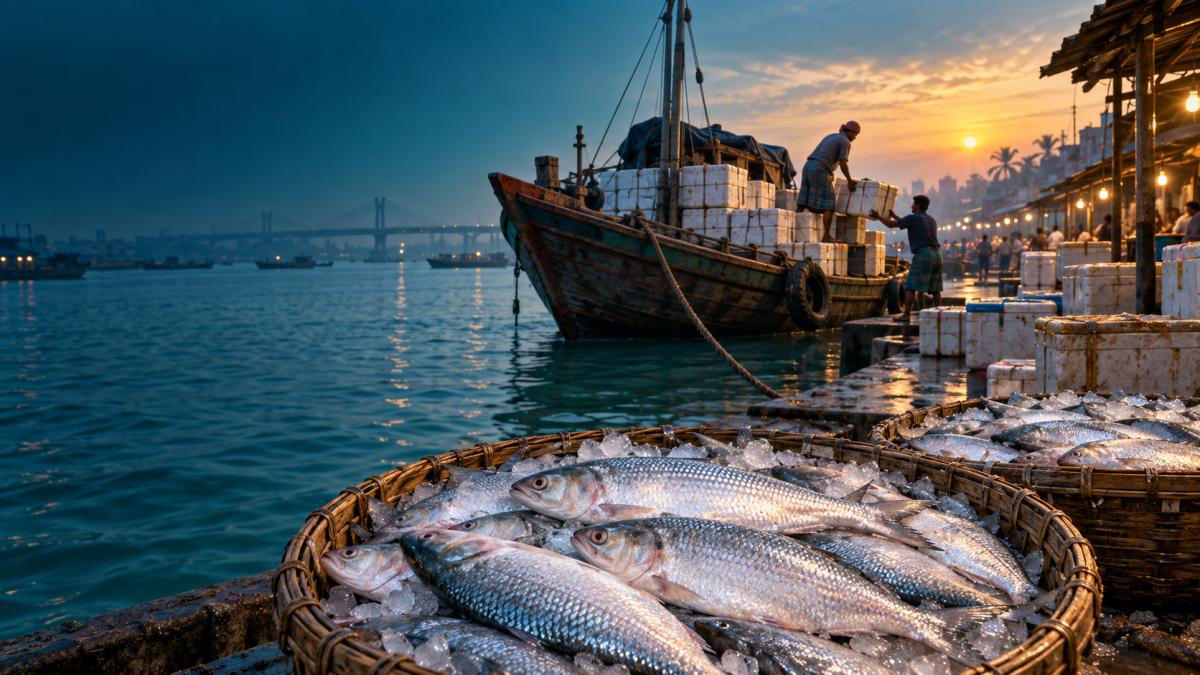
Table of Contents
Hilsa Imports Through Benapole Surge in August
Thebangladaily.com – More than 352,000 kilograms of hilsa entered Bangladesh from India through the Benapole land port in Jashore during the first two months of the 2026-27 fiscal year, bringing a noticeable increase in supply to markets across the district.
Records from the Fisheries Quarantine Office at Benapole show that total imports reached 352,786 kilograms in July and August. The pace of imports accelerated sharply in August, when 323,346 kilograms arrived through 19 importing firms. In July, three firms brought in 29,440 kilograms.
The August volume was nearly 11 times greater than the quantity imported in July, illustrating how quickly cross-border hilsa supply expanded during the period. The fish imported over the two months carried a declared value of Tk 69.29 million. Of that amount, July imports were valued at Tk 3.55 million, while August imports accounted for Tk 65.75 million.
Greater Supply Reaches Local Markets
The incoming hilsa has added to availability in Benapole, Sharsha, Bagachra, Navaran and Jashore. For buyers, the larger supply has created a more visible price difference between imported fish and locally caught hilsa.
At Barabazar in Jashore, locally sourced hilsa weighing roughly 1.2 to 1.3 kilograms has been selling at about Tk 3,300 to Tk 3,400 per kilogram. Imported hilsa, generally said to weigh between 1.3 and 1.4 kilograms, has been available at around Tk 1,400 per kilogram.
The substantial gap means consumers are able to find a lower-priced option, but it has also made clear labeling more important. Hilsa is among Bangladesh’s best-known fish and is valued not only for its size but also for its flavour, freshness and origin. When fish of different origins are displayed side by side, buyers need sufficient information to make an informed choice.
Some consumers and traders say imported hilsa can look much like local fish, though they believe differences can be noticed in taste and smell. Such concerns have led to calls for sellers to identify imported fish clearly instead of presenting it as locally caught hilsa.
Questions Over Origin and Marketing
Local traders have also alleged that a portion of fish entering the market may originate in Myanmar before reaching Bangladesh through India. Fisheries quarantine officials maintain that the hilsa entering through Benapole is Indian, while fish from Myanmar comes into Bangladesh through Chattogram port.
The distinction matters because the route and declared origin of food products are central to market oversight. At a busy border point such as Benapole, quarantine procedures are intended to track fish shipments entering the country and ensure that imports move through the required channels.
Fisheries Quarantine Office Inspector Ashwadul Alam confirmed that 352,786 kilograms of hilsa entered through Benapole during July and August. The figures highlight the role of land-port imports in supplementing fish supplies in southwestern markets at a time when demand for hilsa remains strong.
Jashore District Fisheries Officer Monirul Mamun said fish markets are monitored regularly. He noted, however, that fisheries laws do not provide a basis for legal action simply because traders market imported fish as local hilsa.
That position places particular importance on consumer-protection requirements. Md Selimuzzaman, assistant director of the Directorate of National Consumer Rights Protection in Jashore, said imported hilsa must be sold with proper disclosure. He said the issue would be examined and market drives could be carried out if needed.
Why Clear Disclosure Matters
For consumers, the question is not whether imported hilsa should be available, but whether the product on sale is accurately described. Imported fish may offer a less expensive alternative for households facing high prices for local hilsa. At the same time, customers paying a premium for locally caught fish should be able to know what they are buying.
Transparent labeling can also help honest traders. Sellers who properly identify imported hilsa can offer customers a lower-cost choice without creating confusion over quality, origin or price. Clear information at the point of sale is especially important where similar-looking fish are sold in the same market.
The rise in August imports has therefore produced two parallel effects in Jashore and nearby areas: it has expanded the availability of hilsa, and it has renewed attention on how imported fish is presented to buyers. With monitoring expected to continue, the focus will remain on accurate disclosure and fair treatment for consumers in local fish markets.
Related Reading
Frequently Asked Questions
What is 3 5 lakh kg hilsa imported?
3 5 lakh kg hilsa imported is the main topic of this guide. The article explains the context, practical details, and next steps readers should understand.
Why does 3 5 lakh kg hilsa imported matter?
3 5 lakh kg hilsa imported matters because readers are looking for a useful answer, not just a short summary. Good content should match search intent and help them decide what to do next.