
36 were victims of violation last month, out of 54, says Mahila Parishad
Of the 54 women and girls sexually assaulted across Bangladesh last month, 36 were minors. That single ratio — nearly two out of every three rape victims

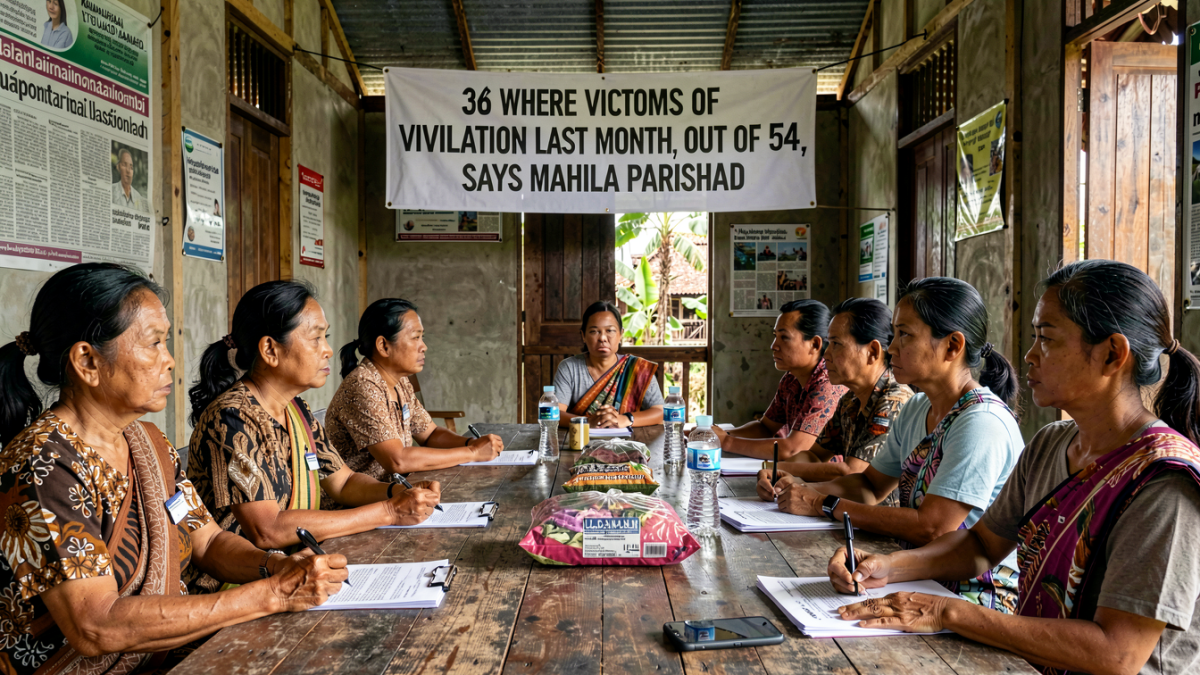
Table of Contents
Two-Thirds of Rape Victims Were Children: Bangladesh Mahila Parishad’s August Data Exposes Deepening Crisis
Thebangladaily.com – Of the 54 women and girls sexually assaulted across Bangladesh last month, 36 were minors. That single ratio — nearly two out of every three rape victims being children — stands as perhaps the most arresting figure in a dataset released Tuesday by the national women’s rights body, Bangladesh Mahila Parishad. The organisation’s tally places total recorded violence against females at 252 incidents in August alone, spanning every major category of physical, sexual, and psychological harm.
How the Numbers Were Built
The figures did not emerge from police statistics or hospital admissions. They were assembled by the Parishad’s Central Legal Aid Sub-Council, which tracks coverage across 15 national daily newspapers and two online news platforms. Each incident logged in those outlets during the month was categorised, tallied, and cross-checked before inclusion. The organisation was explicit that its count reflects only what reached print or digital media; the true magnitude of gender-based violence in Bangladesh almost certainly exceeds what the data captures.
Breakdown by Age and Form of Harm
Among the 252 recorded victims, 134 were adult women and 118 were girls. The age split matters because it reveals where institutional protection fails most acutely. Girls accounted for a majority of sexual-violence cases: of the 54 confirmed rapes, 36 involved minors; of the 14 attempted rapes, 11 victims were girls; and of the 30 incidents classified broadly as sexual violence, 24 were minors.
Lethal outcomes were equally stark. Fifty-five victims died during the month. Forty-five of those deaths were women; ten were girls. Two additional victims — one of them a girl — were killed after being raped, underscoring how sexual assault and homicide intersect in Bangladesh’s violence landscape. Thirteen victims, eight of them girls, were gang-raped, a pattern that often signals communal or neighbourhood-level complicity rather than isolated criminal acts.
Other Categories Logged in August
Beyond rape and homicide, the Parishad recorded:
Fourteen victims — twelve of them girls — experienced sexual harassment or physical sexual assault short of completed rape. Nine victims, eight of them minors, were stalked or subjected to sustained harassment. Seven victims, four of them girls, endured cyber violence, a category that has grown steadily as smartphone penetration reaches even rural households. The remaining incidents fell under attempted murder, deliberate burning, suicide linked to domestic or workplace abuse, exploitation of domestic workers, routine domestic violence, forced child marriage, and abduction.
Why the Child-Victim Ratio Demands Attention
The concentration of sexual violence against girls is not a new finding for Bangladesh. International surveys have long shown that a substantial share of sexual-assault victims in South Asia are under eighteen, yet the figure of 36 out of 54 in a single month’s media-monitored sample is difficult to ignore. It suggests that children remain exposed in settings — homes, schools, transit routes, workplaces of older siblings — where adults either fail to intervene or are themselves perpetrators.
The gang-rape subset (13 cases, eight involving girls) adds a layer of communal violence that individualised criminal-justice responses rarely address. When multiple assailants act together, the incident often carries social dimensions — caste, neighbourhood dispute, land conflict — that a single-arrest prosecution does not resolve.
Limitations and What Comes Next
The Parishad itself cautioned that its tally is a media-derived count. Women who are assaulted in remote districts, who lack access to a newspaper or smartphone, or who do not report to police because of stigma, family pressure, or fear of re-victimisation in court, are absent from these numbers. The 252 figure is therefore a floor, not a ceiling.
Nonetheless, the dataset serves a concrete function: it gives advocates, legislators, and the judiciary a monthly reference point for tracking trends. If the proportion of child victims in sexual-assault cases continues to climb, the question shifts from “how many” to “why” — pointing toward gaps in school safety protocols, domestic-worker protections, child-marriage enforcement, and the speed with which police file cases under the Nari-O-Shishu Niyontron Ain (Women and Children Protection Act, 2000).
For now, the August numbers stand as a blunt reminder: in a country of roughly 170 million people, more than a quarter of a thousand women and girls were recorded as victims of violence in a single month, and the majority of sexual-assault victims among them were children.
Related Reading
Frequently Asked Questions
What is 36 were victims of violation last?
36 were victims of violation last is the main topic of this guide. The article explains the context, practical details, and next steps readers should understand.
Why does 36 were victims of violation last matter?
36 were victims of violation last matters because readers are looking for a useful answer, not just a short summary. Good content should match search intent and help them decide what to do next.