B’desh, Japan sign deal to boost maritime security
Bangladesh and Japan have taken a new step in their growing strategic relationship by signing a grant agreement aimed at improving maritime safety and

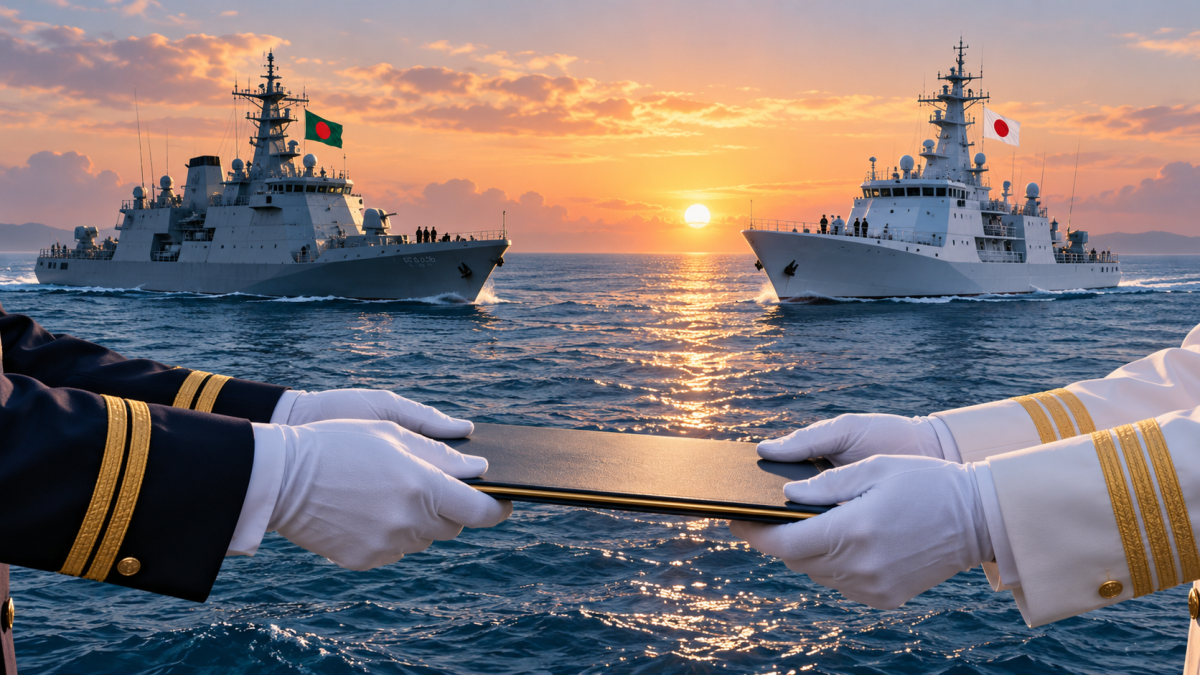
Table of Contents
Bangladesh and Japan Deepen Maritime Security Cooperation
Thebangladaily.com – Bangladesh and Japan have taken a new step in their growing strategic relationship by signing a grant agreement aimed at improving maritime safety and security. Under the arrangement, Japan will provide the Bangladesh Coast Guard with a patrol vessel in the 35-metre class, strengthening the force’s ability to operate in the country’s coastal and maritime areas.
The documents for the Maritime Safety and Security Capacity Enhancement Project were signed and exchanged in Dhaka on Tuesday. Japanese Ambassador to Bangladesh Saida Shinichi and Economic Relations Division Secretary Md Shahriar Kader Siddiky represented their respective sides at the ceremony.
The project places practical operational capacity at the centre of bilateral cooperation. The planned Japanese-built vessel is intended to support Coast Guard duties that include responding to maritime crime, conducting patrol activity and carrying out search-and-rescue missions when emergencies arise.
Support for emergency response
Bangladesh’s coastal waters are important for trade, fishing, transport and the livelihoods of communities living near the sea and major rivers. These same areas can become difficult operating environments during severe weather and other emergencies. A capable patrol vessel can help authorities reach affected locations, assist people in distress and support coordinated rescue operations.
The agreement specifically highlights the use of the vessel during natural disasters and emergency situations. Search-and-rescue work often depends on speed, mobility and the ability to operate safely in demanding conditions. The addition of a new vessel is expected to give the Bangladesh Coast Guard greater capacity to carry out those responsibilities.
Its role will not be confined to disaster response. Maritime law-enforcement agencies also work to deter and address criminal activity at sea. A modern patrol asset can extend the Coast Guard’s operational reach and help it undertake security missions in Bangladesh’s maritime zone.
A broader strategic partnership
The signing came during Prime Minister Tarique Rahman’s visit to Japan from October 26 to 29. The timing underlines the importance both countries place on expanding cooperation beyond traditional economic ties.
Bangladesh and Japan have developed a strategic partnership that covers a range of shared interests. Maritime security has become an increasingly significant part of that relationship because safe sea routes, effective emergency preparedness and stable regional waters affect commerce and the security of coastal states.
The new project is expected to support peace and stability in the wider region while reinforcing the relationship between Dhaka and Tokyo. For Bangladesh, the assistance is linked to stronger institutional capacity for its Coast Guard. For Japan, it reflects continued engagement with a partner located along important maritime routes in the Bay of Bengal region.
Grant assistance for a patrol vessel also carries a practical long-term value. Equipment alone does not define maritime security, but a reliable platform can give personnel more options when they need to patrol, investigate incidents, assist vessels or respond to urgent calls for help. The usefulness of such support is measured in the Coast Guard’s ability to perform those missions when conditions are most challenging.
Focus on safety at sea
Maritime safety is closely connected to public security and disaster readiness. Incidents at sea can involve fishing boats, commercial traffic, passengers, coastal communities and people affected by sudden weather events. Effective response requires trained personnel as well as vessels suited to reaching locations where help is needed.
The Japanese-built patrol vessel is expected to become part of Bangladesh’s effort to improve readiness across these responsibilities. Its planned deployment for crime prevention and rescue work reflects the overlapping nature of Coast Guard operations, where security duties and humanitarian assistance can occur side by side.
The agreement therefore represents more than the transfer of a single vessel. It signals a shared commitment to improving maritime capability through bilateral cooperation. As Bangladesh continues to manage security and safety needs across its waters, the project is expected to provide an additional resource for the Coast Guard’s operational work.
For both nations, the initiative adds another concrete element to a partnership that has continued to broaden. The vessel is intended to help Bangladesh protect maritime interests, support people facing danger at sea and contribute to a safer regional environment.
Related Reading
Frequently Asked Questions
What is B desh Japan sign deal to boost?
B desh Japan sign deal to boost is the main topic of this guide. The article explains the context, practical details, and next steps readers should understand.
Why does B desh Japan sign deal to boost matter?
B desh Japan sign deal to boost matters because readers are looking for a useful answer, not just a short summary. Good content should match search intent and help them decide what to do next.