
BD receives $2.13 billion in remittances in Oct
Bangladesh’s inward remittance earnings rose to $2.137 billion during the first 24 days of October, offering a strong early contribution to the country’s

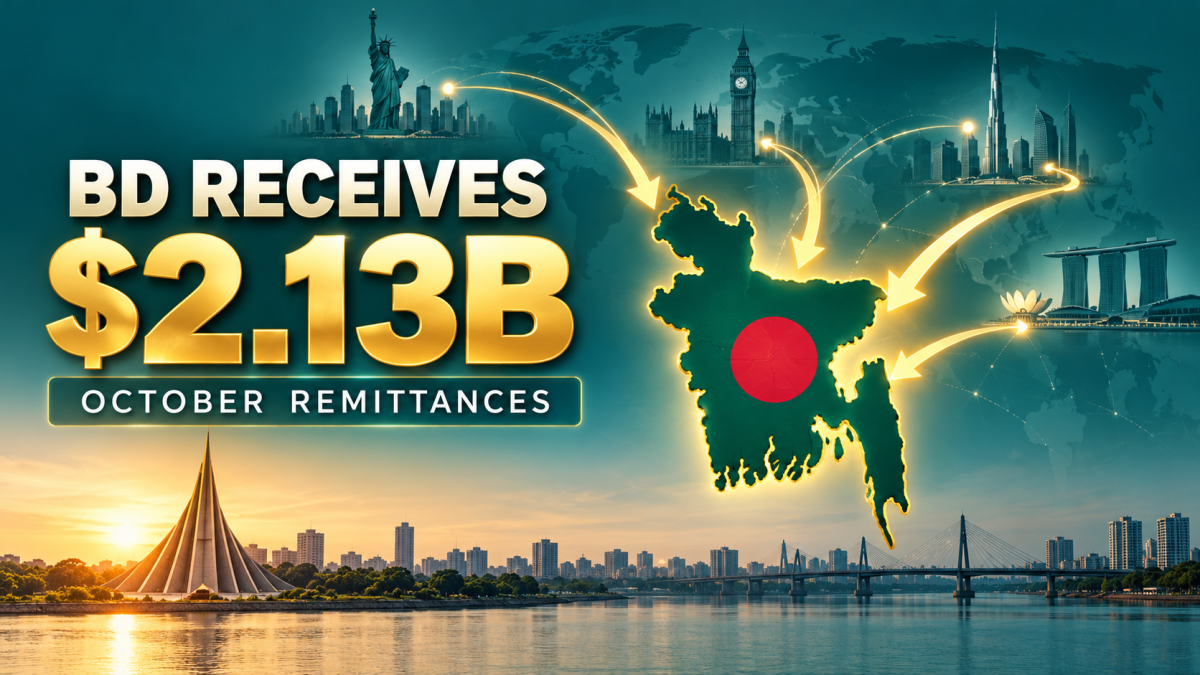
Table of Contents
Bangladesh Remittance Inflows Reach $2.137 Billion in First 24 Days of October
Thebangladaily.com – Bangladesh’s inward remittance earnings rose to $2.137 billion during the first 24 days of October, offering a strong early contribution to the country’s foreign-currency inflows for the month.
At an exchange rate of Tk 123 for each US dollar, the amount is equivalent to more than Tk 26,285 crore. The figures, released by Bangladesh Bank on Sunday, October 25, show that expatriate Bangladeshis continued to send significant funds home through formal channels.
Remittances are a major source of support for many households, helping families meet regular expenses, finance education, cover healthcare needs and maintain savings. For the broader economy, these transfers add to foreign-exchange resources and provide an important stream of external income.
Nearly $294 Million Arrived in Six Days
Between October 19 and October 24, the country received $294 million in remittances. This six-day figure formed part of the $2.137 billion recorded over the first 24 days of the month.
The pace of inflows points to continued participation by Bangladeshis living and working abroad in sending money to relatives and dependants at home. Remittance trends are watched closely because they affect the availability of foreign currency in the banking system and reflect the financial links between overseas workers and communities across Bangladesh.
October’s partial-month total was higher than the amount sent during the comparable period a year earlier. In the first 24 days of October in the previous year, remittance inflows stood at $2.002 billion.
The latest reading therefore represents a year-on-year increase, with the current total exceeding last year’s corresponding amount by $135 million. The comparison indicates that inflows from expatriates have maintained an upward direction in this period.
Fiscal-Year Inflows Show 11.9% Growth
The rise is also visible in the cumulative figures for the current fiscal year. From July through October 24, Bangladesh received $10.729 billion in remittances.
During the same portion of the previous fiscal year, the country had received $9.588 billion. The difference of more than $1.14 billion translates into growth of 11.9 per cent over the corresponding period.
These figures cover nearly four months of the fiscal year, beginning in July and running through most of October. They provide a broader view than a single month’s inflows and show how remittances have performed across the early part of the fiscal calendar.
For families receiving money from abroad, the value of remittances in taka is shaped by the exchange rate used for the transfer. Using the Tk 123-per-dollar rate cited with the October data, the $2.137 billion received in the first 24 days of the month amounted to more than Tk 26,285 crore.
This conversion helps illustrate the domestic scale of the funds entering the country. While the dollar total is important for measuring foreign-currency inflows, the taka equivalent is directly relevant to recipients who use the money for household and local economic needs.
Why the Figures Matter
Remittance receipts have a direct connection to daily life for a large number of families with relatives overseas. Regular transfers may be used for food, housing, school costs, medical treatment, debt repayment or small household investments. The timing and size of transfers can vary, but the cumulative totals show the continuing importance of these financial flows.
At the national level, remittance inflows are monitored alongside other external earnings because they bring foreign currency into Bangladesh. A higher inflow can strengthen the pool of funds available through formal financial channels, while sustained growth provides a positive indication for the country’s external income during the fiscal year.
The October figures do not represent the full month, as they cover only the first 24 days. The final monthly total will depend on transfers received during the remaining days of October. Even so, the $2.137 billion already recorded places the month ahead of the equivalent period last year.
The comparison with the previous fiscal year also gives the latest data additional significance. Remittances of $10.729 billion from July to October 24 were not merely higher in dollar terms than the $9.588 billion received in the same period previously; they also marked an 11.9 per cent increase.
As October draws to a close, attention will remain on whether the month’s final remittance figure builds further on the gains seen in the first 24 days. The available data already show that expatriate earnings continue to make a substantial contribution to Bangladesh’s foreign-currency inflows and to the finances of households receiving support from abroad.
Related Reading
Frequently Asked Questions
What is BD receives 2 13 billion in remittances?
BD receives 2 13 billion in remittances is the main topic of this guide. The article explains the context, practical details, and next steps readers should understand.
Why does BD receives 2 13 billion in remittances matter?
BD receives 2 13 billion in remittances matters because readers are looking for a useful answer, not just a short summary. Good content should match search intent and help them decide what to do next.