Clashes paralyze central Dhaka; how should you commute
Travel across central Dhaka has become exceptionally difficult on Sunday, September 27, as street clashes and intense congestion have brought movement on

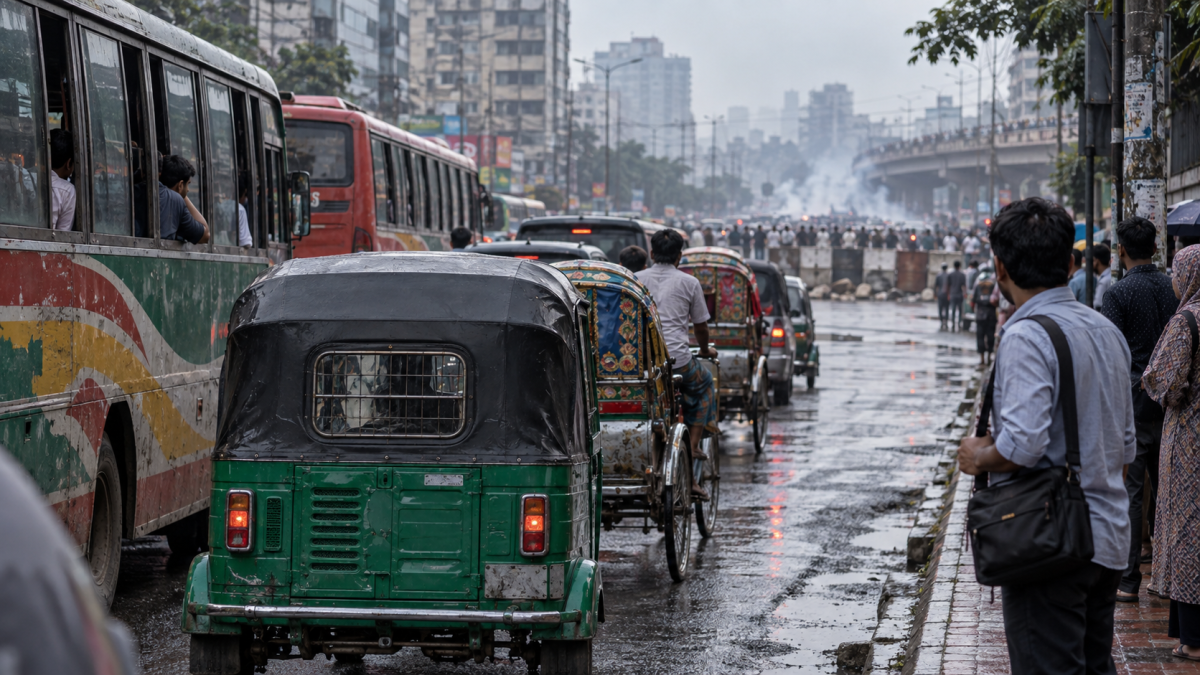
Table of Contents
Central Dhaka Traffic Grinds to a Halt Amid Clashes
Thebangladaily.com – Travel across central Dhaka has become exceptionally difficult on Sunday, September 27, as street clashes and intense congestion have brought movement on several major roads to a near standstill. Commuters are facing long delays, while many of the city’s busiest intersections are blocked by bumper-to-bumper traffic.
Live traffic maps show extensive dark maroon sections across key corridors, indicating severe congestion and little or no vehicle movement. The situation is particularly serious around Shahbagh, where ongoing unrest has left the intersection and nearby Dhaka University area effectively immobilised.
Shahbagh and Science Lab Among Worst-Affected Areas
Roads surrounding PG Hospital and Ramna Park are heavily congested, adding pressure to the wider Shahbagh zone. Vehicles on Mirpur Road have also slowed dramatically near Science Lab, with the traffic backlog spreading toward Elephant Road and New Market.
Local confrontations in these areas have further restricted normal road use. Even where traffic is still moving, vehicles are progressing only gradually, creating uncertainty for people trying to reach workplaces, hospitals, educational institutions and other destinations.
The disruption is not limited to a few intersections. Congestion has extended along Kazi Nazrul Islam Avenue in the direction of Karwan Bazar and Tejgaon, affecting important routes that connect central Dhaka with northern parts of the city.
Southern Routes Also Under Pressure
Commuters travelling toward Motijheel, Saydabad and Jatrabari are also experiencing prolonged delays. These routes carry a large number of daily passengers and commercial vehicles, meaning blockages in central areas can quickly affect traffic far beyond the original choke points.
For residents, the immediate concern is not only the time lost in traffic but also the difficulty of predicting which road will remain usable. Conditions can change quickly when crowds gather near major intersections, particularly around Shahbagh, Science Lab and New Market.
People with non-essential travel plans are being urged to postpone or reconsider journeys through Shahbagh, Science Lab, New Market and Kazi Nazrul Islam Avenue. Avoiding these areas may help reduce both personal travel time and additional pressure on already overloaded roads.
Suggested Alternatives for Commuters
Passengers travelling between northern and southern Dhaka may find Dhaka Metro Rail, MRT Line 6, the most practical option for avoiding road congestion. The rail service can help commuters bypass many of the worst affected surface routes, although passengers should remain alert around station entrances located near unstable areas.
For east-west travel, drivers may consider Hatirjheel, the Outer Circular Road and the Khilgaon flyovers. These routes may offer a way around the central traffic bottlenecks, though motorists should still expect slower-than-usual movement as diverted vehicles seek alternative roads.
Those heading toward Old Dhaka or Sadarghat may use the Sadarghat-Gabtoli embankment road instead of attempting to pass through central choke points. Choosing an outer route could be particularly important for drivers who would otherwise need to cross Shahbagh or nearby congested corridors.
Emergency Travel Needs Extra Planning
Emergency vehicles travelling to Dhaka Medical College Hospital or Bangabandhu Sheikh Mujib Medical University may need to avoid Shahbagh and use peripheral approaches through Chankharpul or Palashi. In a citywide traffic disruption, ambulance movement can be affected by congestion far from the destination itself, making route selection especially important.
Families accompanying patients, as well as people with urgent medical appointments, should allow extra time and consider travelling by the most direct available route outside the Shahbagh area. Keeping emergency lanes clear wherever possible is also essential when traffic is moving slowly.
Check Conditions Before Leaving Home
With the situation remaining volatile throughout the day, commuters should check real-time traffic maps before beginning a journey. A route that appears open early in the day may become congested later as traffic diversions, road blockages and crowd activity shift across the city.
Residents can reduce unnecessary exposure to delays by combining errands, using public transport where practical and postponing non-urgent trips through central Dhaka. Those who must travel should keep alternative routes in mind, maintain communication with family or colleagues and be prepared for significant changes in travel time.
For now, Shahbagh, Dhaka University, Science Lab, New Market and sections of Kazi Nazrul Islam Avenue remain among the most difficult places to cross by road. Until conditions improve, careful planning and a willingness to avoid the central corridors will be crucial for commuters navigating Dhaka on Sunday.
Related Reading
Frequently Asked Questions
What is Clashes paralyze central Dhaka how should?
Clashes paralyze central Dhaka how should is the main topic of this guide. The article explains the context, practical details, and next steps readers should understand.
Why does Clashes paralyze central Dhaka how should matter?
Clashes paralyze central Dhaka how should matters because readers are looking for a useful answer, not just a short summary. Good content should match search intent and help them decide what to do next.