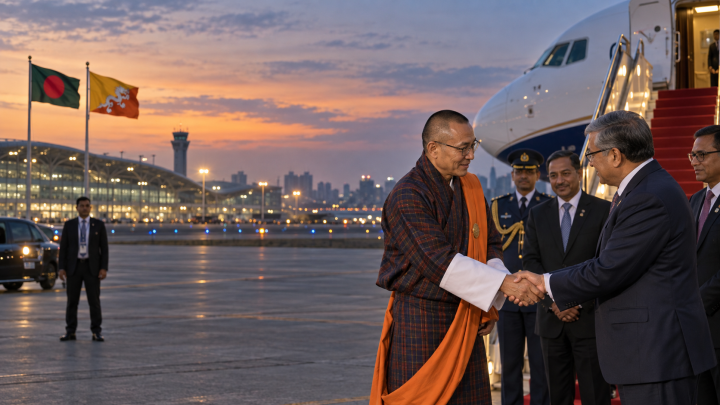
Govt committed to building inclusive, liveable and climate-resilient cities: State Minister
Dhaka's skyline has grown faster than its infrastructure could keep pace with. Decades of rural-to-urban migration have concentrated economic activity

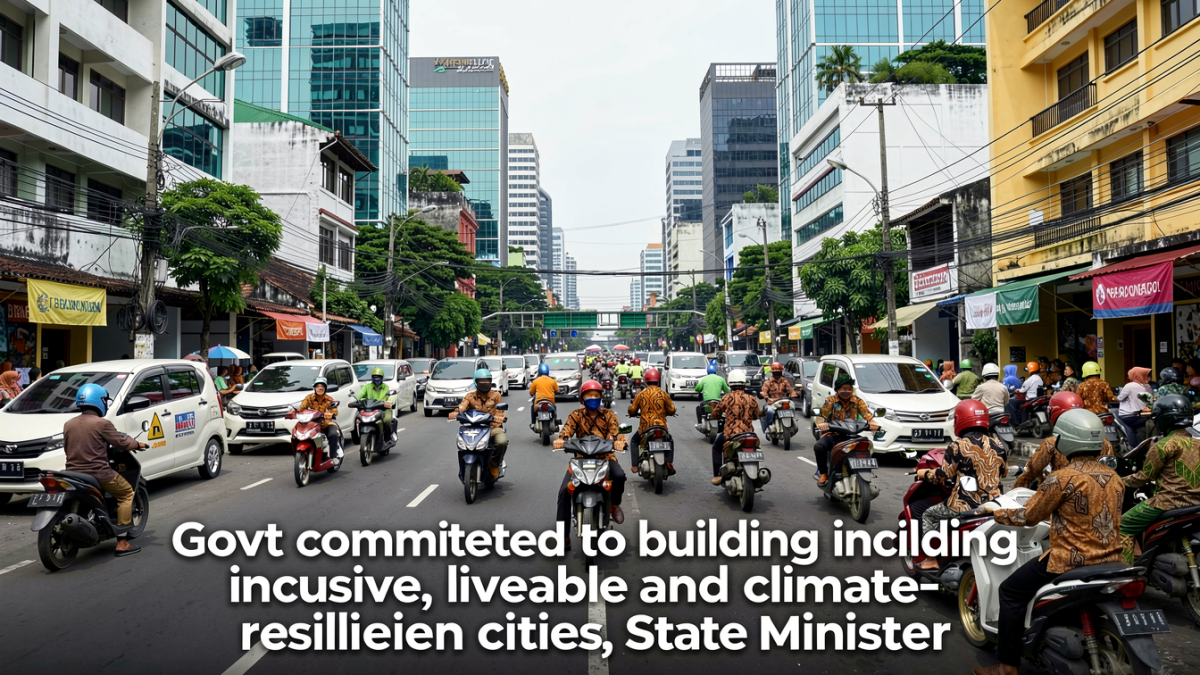
Table of Contents
Bangladesh’s Urban Policy Push: A Multi-Stakeholder Forum Tackles the Capital’s Growing Pains
Thebangladaily.com – Dhaka’s skyline has grown faster than its infrastructure could keep pace with. Decades of rural-to-urban migration have concentrated economic activity, investment, and population density in the capital and along the corridor stretching south to Chattogram, producing a familiar catalogue of urban stress: gridlocked arteries, chronic waterlogging after monsoon rains, overflowing waste streams, thickening air pollution, and municipal institutions stretched beyond their operational capacity. Against that backdrop, the National Urban Forum opened in the capital on Sunday, bringing together government officials, multilateral development partners, and academic institutions to examine how Bangladesh’s cities can be made more inclusive, liveable, and resilient to climate shocks.
A Government Commitment Framed in Practical Terms
State Minister for Social Welfare Barrister Farazana Sharmin addressed the opening ceremony as a special guest, outlining what she described as the government’s sustained effort to translate the national urban policy into on-the-ground outcomes. She stressed that coordinated initiatives are already underway under a sustainable development framework designed to make cities functionable for every resident, not merely for a privileged subset.
“We do not want to make our beloved cities liveable only for ourselves. We want to ensure a supportive environment for the next generation and our children so that they can breathe freely in a pollution-free environment,” she said.
The minister also underscored the dimension of disaster preparedness, noting that ongoing measures aim to shield urban dwellers from the worst impacts of natural hazards — a particular concern in a country where cyclones, riverine flooding, and increasingly erratic rainfall patterns intersect with dense built environments.
Who Organised the Forum and Why It Matters
The two-day event was jointly organised by Bangladesh’s Local Government Division and UNDP Bangladesh, with backing from a constellation of partners: the Asian Development Bank (ADB), Japan International Cooperation Agency (JICA), the Islamic Development Bank, Bangladesh University of Engineering and Technology (BUET), and the Bangladesh Institute of Planners (BIP). The forum was scheduled to conclude on Monday.
The breadth of institutional involvement signals that urban governance in Bangladesh is no longer treated as a purely domestic administrative matter. Development finance, technical cooperation, and academic research are being woven into the same conversation as municipal planning, suggesting an attempt to pool expertise across sectors that have historically operated in silos.
International Voices: Responsibility Beyond the Conference Room
UNDP Bangladesh Resident Representative Stephen Rodriques framed the gathering not as a closed loop of discussion but as the opening act of a longer obligation. He told delegates that the forum was “not an end in itself but the beginning of a shared responsibility to act on the discussions held at the event,” urging participants to carry the deliberations back into operational planning and budget cycles.
James Goldman, Deputy High Commissioner and Development Director at the British High Commission in Dhaka, voiced the hope that the forum would deepen cooperation among the various development partners already engaged in Bangladesh’s sustainable urban development agenda. His remarks pointed to the growing expectation that bilateral and multilateral aid streams be aligned rather than fragmented across competing project designs.
Akira Matsunga, Deputy Country Director at the ADB, reminded the audience of the bank’s longstanding presence in Bangladesh’s urban sector. He stated the institution’s guiding principle plainly:
“Our priority is to coordinate this support to make cities more inclusive, liveable and competitive,” he said.
The Dhaka–Chattogram Corridor Under the Microscope
Session papers and panel discussions at the forum drew attention to the geographic concentration of economic activity and foreign and domestic investment in Dhaka and along the Dhaka–Chattogram corridor. That corridor, linking the capital to the country’s principal seaport, carries a disproportionate share of national GDP generation, logistics throughput, and labour migration. The concentration brings efficiency gains but also amplifies vulnerability: a single infrastructure failure, a cyclone track, or a pandemic wave can cascade through the entire economic spine of the country.
Speakers catalogued the persistent operational challenges that accompany such density. Traffic congestion in Dhaka routinely adds hours to daily commutes and inflates transport costs for goods and services. Waterlogging during the monsoon months paralyses lower-lying neighbourhoods and damages road surfaces. Solid-waste management remains under-resourced relative to the volume generated by a rapidly growing urban population. Air and water pollution indicators have worsened in industrial and peri-urban zones. Institutional capacity at the municipal level — in planning, enforcement, data collection, and inter-agency coordination — has not scaled at the same rate as the cities themselves.
Why the Forum’s Timing Carries Weight
Bangladesh’s urban population is projected to keep rising through the coming decades, and climate projections for the Bay of Bengal region point to more frequent and intense extreme-weather events. The window in which cities can be retrofitted with resilient infrastructure, green corridors, and adaptive governance is narrowing. A forum that convenes government, multilateral financiers, technical agencies, and domestic academic institutions in a single room for even two days represents an attempt to compress that window’s urgency into actionable policy dialogue.
The minister’s closing emphasis on intergenerational responsibility — children breathing clean air, cities that do not collapse under the next cyclone — reframes urban policy from a technical planning exercise into a question of social contract. Whether the commitments voiced in Dhaka translate into funded projects, enforced building codes, and integrated disaster-response protocols will be measured not in conference hallways but in the daily experience of millions of urban residents over the years ahead.
Related Reading
Frequently Asked Questions
What is Govt committed to building inclusive liveable?
Govt committed to building inclusive liveable is the main topic of this guide. The article explains the context, practical details, and next steps readers should understand.
Why does Govt committed to building inclusive liveable matter?
Govt committed to building inclusive liveable matters because readers are looking for a useful answer, not just a short summary. Good content should match search intent and help them decide what to do next.