PM’s political aide meets Hefazat amir
Prime Minister Tarique Rahman’s political aide, Md Rashed Khan, held a meeting with Hefazat-e-Islam Bangladesh amir Allama Muhibbullah Babunagari on Friday in

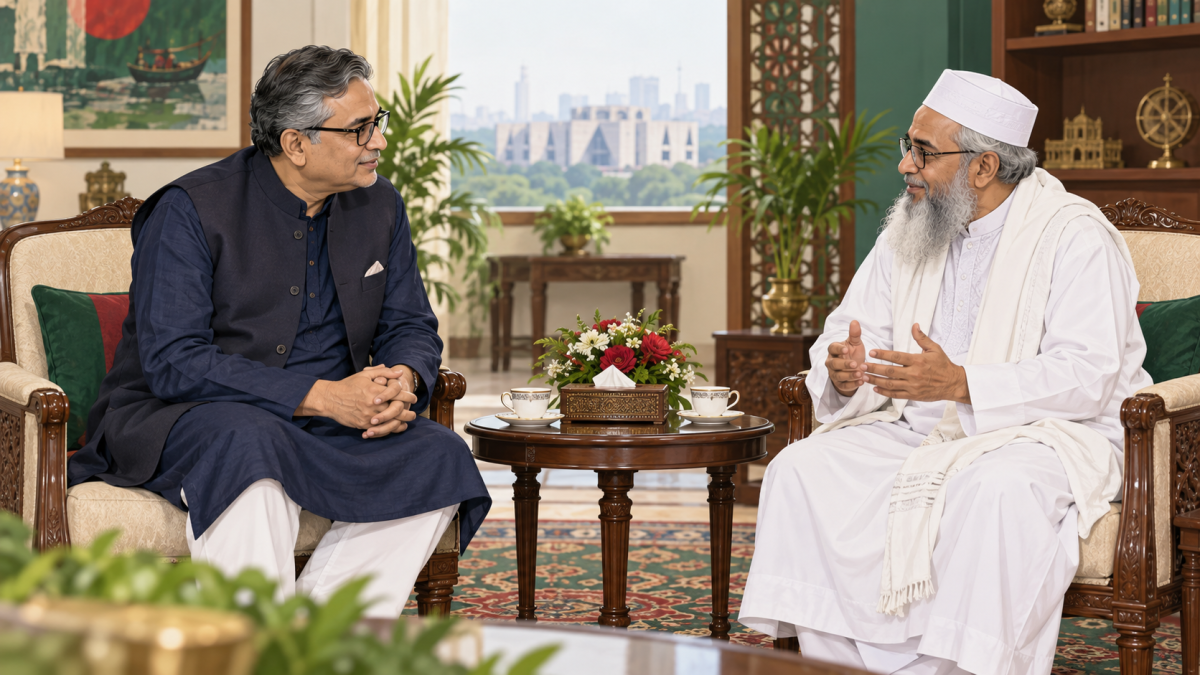
Table of Contents
Political Outreach Brings PM’s Aide to Hefazat Amir in Fatikchhari
Thebangladaily.com – Prime Minister Tarique Rahman’s political aide, Md Rashed Khan, held a meeting with Hefazat-e-Islam Bangladesh amir Allama Muhibbullah Babunagari on Friday in Fatikchhari, Chattogram.
The discussion took place at about noon at Al-Jamiatul Islamia Azizul Ulum Babunagar Madrasa, located in the Babunagar area of Fatikchhari. The visit brought together a senior representative linked to the prime minister and one of the country’s prominent Islamic religious leaders in a setting that also included local political and administrative figures.
Prayer and Messages of Unity
After the meeting, Rashed Khan told journalists that his purpose in visiting Babunagari was to seek his prayers. He said the Hefazat amir offered prayers for the prime minister and urged the BNP and the people of Bangladesh to remain committed to Islamic values.
Rashed Khan also conveyed that Babunagari had encouraged cooperation with the current government. The Hefazat leader further stressed the importance of preserving unity among groups that opposed the former political order, describing such unity as necessary for the broader task of rebuilding the state.
The remarks placed the meeting within a wider political atmosphere in which dialogue, cooperation and shared priorities are being emphasised by different actors. While the visit was centred on a religious leader’s blessings and guidance, it also highlighted the continuing relevance of engagement between political representatives, religious institutions and local administration.
Local Leaders Present
Several officials and political figures attended the meeting alongside Rashed Khan. They included Mahbubur Rahman Shamim, administrator of the Chattogram District Council and a central organising secretary of the BNP.
Fatikchhari Upazila Nirbahi Officer Sayeed Mohammad Ibrahim was also present, along with other local political and administrative representatives. Their attendance reflected the local importance attached to the visit at the Babunagar madrasa.
Fatikchhari is an upazila in Chattogram, and the meeting’s location at Al-Jamiatul Islamia Azizul Ulum Babunagar Madrasa gave the encounter a distinctly local setting despite the national significance of the participants involved. Religious educational institutions often serve as gathering places for community engagement, particularly when senior clerics receive visitors from public and political life.
Why the Meeting Matters
The meeting did not announce a formal agreement or any specific policy decision. Its significance instead lay in the messages voiced afterward: prayers for the prime minister, a call to uphold Islamic values, support for cooperation with the government and an appeal for political unity.
For readers, the event illustrates how public political outreach can take place through personal meetings and symbolic gestures as well as through official announcements. Seeking prayers from a religious leader carries cultural and social meaning, while calls for unity can signal an effort to encourage cooperation among groups with related political perspectives.
Babunagari’s emphasis on rebuilding the state was linked by Rashed Khan to maintaining cohesion among forces that had opposed the earlier political arrangement. The comments did not outline a detailed programme for that objective, but they underscored the value being placed on avoiding division during a period of political transition and institutional change.
The presence of district, upazila and party-level representatives also showed that the gathering extended beyond a private courtesy call. It connected national political representation with local administration and community leadership in Fatikchhari.
Focus Remains on Cooperation
Rashed Khan’s visit was framed publicly as one of respect and consultation. His comments focused on the prayers he sought from the Hefazat amir and on Babunagari’s advice for the prime minister, the BNP and the wider public.
The Hefazat amir’s call for cooperation with the current government adds a clear public dimension to the exchange. At the same time, the appeal to protect Islamic values addressed a broader social message rather than a narrowly administrative issue.
Friday’s meeting therefore combined religious courtesy, political communication and local representation. It brought senior figures together at a madrasa in Babunagar and concluded with calls for faith-based values, cooperation with the government and unity in the effort to rebuild the country.
Related Reading
Frequently Asked Questions
What is PM s political aide meets Hefazat?
PM s political aide meets Hefazat is the main topic of this guide. The article explains the context, practical details, and next steps readers should understand.
Why does PM s political aide meets Hefazat matter?
PM s political aide meets Hefazat matters because readers are looking for a useful answer, not just a short summary. Good content should match search intent and help them decide what to do next.