Rakhine war reshapes cross-border smuggling
War-related shortages in Myanmar’s Rakhine State are changing the economics and direction of illegal trade across the Bangladesh-Myanmar frontier. Smuggling


Table of Contents
Rakhine Conflict Drives a New Pattern of Cross-Border Smuggling
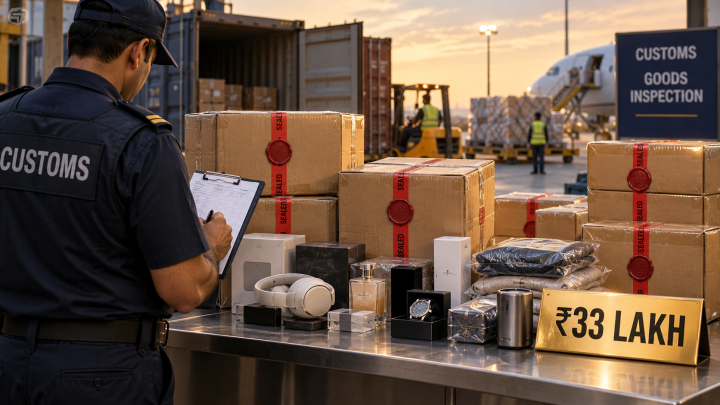
Thebangladaily.com – War-related shortages in Myanmar’s Rakhine State are changing the economics and direction of illegal trade across the Bangladesh-Myanmar frontier. Smuggling groups are increasingly moving basic commodities from Bangladesh into Rakhine, then using return journeys to bring yaba, crystal methamphetamine known as ice, and other drugs into Bangladesh.
The activity marks a shift from the long-established narcotics flow that largely moved from Myanmar into Bangladesh. Investigators now see a two-way criminal supply chain in which food, construction materials, fuel, medicine and fertiliser may be exchanged for illicit drugs. In some cases, cash appears to be playing a reduced role, with narcotics functioning as a form of payment within the illegal trade.
The Bangladesh-Myanmar smuggling corridor has traditionally centred on the Naf River and the Teknaf border area. Tighter monitoring in those locations, however, has encouraged traffickers to move farther into the Bay of Bengal. Fishing boats, cargo vessels and other small watercraft are being used to carry goods while attempting to avoid interception.
Shortages Create Incentives
Fighting between Myanmar’s military and the Arakan Army intensified in November 2023, severely affecting transport and supply networks across Rakhine. Restrictions and conflict have made it harder for goods from central Myanmar to reach local markets, deepening shortages of daily necessities.
That disruption has increased the value of supplies that can be moved in from neighbouring territory. Organised networks have sought to exploit the sharp difference in prices between Bangladesh and Rakhine, particularly for products needed by households and businesses.
“The war in Rakhine has created shortages of various essential commodities. International smuggling networks are exploiting the situation through a goods-for-goods exchange system,”
Mazharul Islam, deputy director of the Department of Narcotics Control in Chattogram, said enforcement agencies had seized substantial quantities of cement, food products, household items and medicines that were allegedly being taken out of Bangladesh. He said smugglers then try to send yaba and ice back across the water in exchange for those goods.
Officials have identified cement as one of the most attractive commodities for traffickers. A 50kg bag that costs about Tk500 in Bangladesh could be sold in Rakhine for roughly 100,000 Myanmar kyats, equivalent to around Tk5,800 at the exchange rate cited by investigators. Such a large margin gives criminal groups a powerful reason to accept the risks of sea transport.
Repeated Seizures Near St Martin’s
Several recent operations near St Martin’s Island illustrate the scale of the attempted shipments. In February, Coast Guard personnel seized 1,600 sacks of cement from two vessels and detained 18 people. Within days, another operation in the same area recovered 1,140 sacks of cement, as well as garlic, chickpeas, potatoes and 7,080 energy drinks. Nineteen people were detained in that case.
On June 4, the Coast Guard detained 52 people and recovered 1,450 sacks of cement from five fishing boats near St Martin’s. During initial questioning, the detainees said the cargo was intended for Rakhine.
Two days before that operation, authorities in the same area had seized 1,700 sacks of cement and detained 20 people. Those held told investigators that they planned to sell the cement in Rakhine, where shortages had raised market prices.
The goods being targeted by smugglers are not limited to building material. Rice, fertiliser, medicines, fuel and other essential products have also been identified in attempted shipments. Their value lies not only in their necessity but also in the difficulty of obtaining them through disrupted legal supply channels inside Rakhine.
Routes Extend Along the Coast
On July 29, the Coast Guard intercepted a cargo vessel near Ganguria Char, beside Bhasan Char in Noakhali. The operation resulted in the seizure of 24,000kg of urea fertiliser, 3,700kg of chickpeas and 6,850kg of gram. The cargo was allegedly bound for Sittwe in Rakhine.
Border Guard Bangladesh officials said increased surveillance along the Ukhia-Teknaf frontier has pushed smugglers to look for routes farther from the traditional border crossing areas. Maheshkhali, Banshkhali, Kutubdia, Anwara and Kuakata have emerged as coastal locations requiring attention.
The geographical shift complicates enforcement. A border crossing can be watched through checkpoints and patrols, while the Bay of Bengal offers a broader operating area and a range of vessels that can blend with legitimate fishing and commercial traffic. The use of several coastal departure points may also make it more difficult to identify the full logistics network behind individual shipments.
“After these goods are taken to Myanmar, smugglers attempt to bring narcotics back in exchange,”
Lt Commander Sabbir Alam Sujon of the Coast Guard headquarters media wing said large volumes of Bangladeshi goods had been seized in anti-smuggling drives. He added that authorities had also recovered significant quantities of yaba and ice during operations connected to this trade.
The apparent barter system has serious implications beyond the immediate loss of goods and revenue. When drugs can be used as payment, criminal networks may be able to avoid or reduce reliance on conventional financial transactions. This can make the trade harder to trace while linking the movement of essential commodities directly to the trafficking of dangerous narcotics.
For Bangladesh, the changing pattern means maritime monitoring is becoming as important as enforcement along the land border and Naf River. The conflict in Rakhine has created a situation in which shortages, price gaps and narcotics trafficking reinforce one another, turning the Bay of Bengal into an increasingly important route for a cross-border illicit economy.
Related Reading
Frequently Asked Questions
What is Rakhine war reshapes cross border smuggling?
Rakhine war reshapes cross border smuggling is the main topic of this guide. The article explains the context, practical details, and next steps readers should understand.
Why does Rakhine war reshapes cross border smuggling matter?
Rakhine war reshapes cross border smuggling matters because readers are looking for a useful answer, not just a short summary. Good content should match search intent and help them decide what to do next.