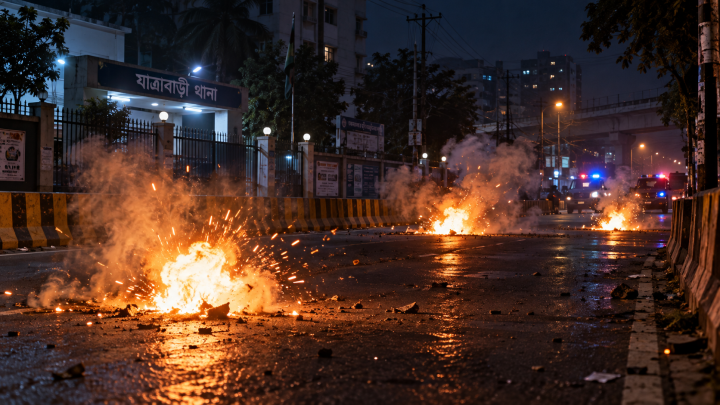
Strong 5.3 magnitude earthquake tremors shake Tibet-Nepal
A moderate earthquake shook Tibet on Wednesday, September 9, with tremors also felt across neighbouring Nepal at a time when both areas are already dealing

Table of Contents
Earthquake Rattles Tibet and Nepal as Region Struggles With Flood Crisis
Thebangladaily.com – A moderate earthquake shook Tibet on Wednesday, September 9, with tremors also felt across neighbouring Nepal at a time when both areas are already dealing with the consequences of deadly flooding and landslides.
The European-Mediterranean Seismological Centre placed the quake at magnitude 5.3 and said its focus was about 35 kilometres below the surface. India’s National Center for Seismology measured the event at magnitude 5.0. Early information indicated no immediate deaths or major destruction linked to the earthquake.
Even without initial reports of serious damage, the tremor has added pressure to a mountain region where communities, rescue teams and infrastructure are facing an exceptionally difficult period. Recent disasters have exposed how quickly conditions can worsen in high-altitude areas, where unstable slopes, glacial terrain and severe weather can create cascading emergencies.
Recent Seismic Activity Raises Concern
The latest quake followed another earthquake in Tibet only days earlier. The United States Geological Survey recorded a magnitude 5.1 tremor there last Thursday, at a depth of 10 kilometres.
Earthquakes in the Himalayan region are not unusual because of the continuing movement of tectonic plates beneath the mountains. However, tremors can be especially worrying after heavy floods and landslides, when ground conditions may already be weakened. Roads, mountain tracks, tunnels and settlements located near steep slopes can remain vulnerable even when an earthquake itself causes no immediate widespread damage.
For residents in Tibet and Nepal, the impact of a quake is not limited to the moment shaking is felt. People in remote communities may have limited access to communication, transport or medical support. Assessing conditions can take time, particularly where roads have been damaged by floodwater or landslides.
Flood Death Toll Continues to Rise
The earthquake comes amid an ongoing humanitarian emergency caused by flooding that began on August 26. Disaster management authorities in Nepal confirmed on Tuesday that 1,357 people had died in the floods, while 5,326 remained missing.
In Tibet, Chinese state media listed 43 deaths and 519 people missing. Across Nepal and Tibet, the combined toll stood at 1,400 dead, with 5,845 people still unaccounted for.
Search and rescue operations in Nepal had entered their 14th day after massive glacial and landslides struck near the border. The length of the operation reflects the scale and difficulty of the response. Mountain terrain can complicate access to affected areas, while debris, damaged routes and harsh conditions may slow efforts to reach people believed to be trapped or isolated.
Hundreds of hydropower workers remain among those missing. Hydropower facilities and related work sites are often located in narrow valleys and near fast-flowing rivers, places that can become highly dangerous during sudden floods or slope failures.
There have also been signs of hope during the rescue effort. Teams safely brought out two Nepali workers from deep tunnels on Friday. A Chinese national was rescued from a tunnel on Saturday. Such operations underline the dangers faced by workers and emergency crews in areas affected by mudslides, glacier-related flooding and damaged underground infrastructure.
Climate Risks in High Mountain Areas
Experts have warned that climate change is speeding up glacial melt across the world. In the Himalayas and other high-altitude regions, faster melting can increase the danger of flash floods, landslides and glacial lake outburst floods.
A glacial lake outburst flood can occur when water held behind natural barriers of ice, rock or sediment suddenly escapes. The resulting surge may move rapidly down valleys, carrying debris and damaging roads, bridges, homes and energy facilities. Heavy rainfall and unstable slopes can further increase the threat.
These hazards make disaster planning particularly important for communities living near rivers, glaciers and mountain valleys. Early-warning systems, reliable communication networks, evacuation planning and safer infrastructure can all help reduce risks when emergencies unfold quickly. Rescue capacity also becomes crucial when people are working or living in isolated locations.
The succession of flooding, landslides and earthquakes has renewed questions about how prepared the region is for overlapping disasters. An earthquake of moderate strength may pass without severe casualties, but it can still unsettle already fragile terrain and heighten anxiety among people who have recently lost homes, relatives or livelihoods.
Authorities will continue to monitor the affected areas for aftershocks, new landslides and further flood-related dangers. For families awaiting news of missing relatives, the immediate priority remains the search effort and safe access to communities cut off by the disaster.
Wednesday’s tremor was a reminder that Tibet and Nepal face multiple natural hazards at once. While no major earthquake damage had been confirmed in the initial aftermath, the event occurred against a devastating backdrop of loss, displacement and an ongoing struggle to locate thousands of missing people.
Related Reading
Frequently Asked Questions
What is Strong 5 3 magnitude earthquake tremors?
Strong 5 3 magnitude earthquake tremors is the main topic of this guide. The article explains the context, practical details, and next steps readers should understand.
Why does Strong 5 3 magnitude earthquake tremors matter?
Strong 5 3 magnitude earthquake tremors matters because readers are looking for a useful answer, not just a short summary. Good content should match search intent and help them decide what to do next.