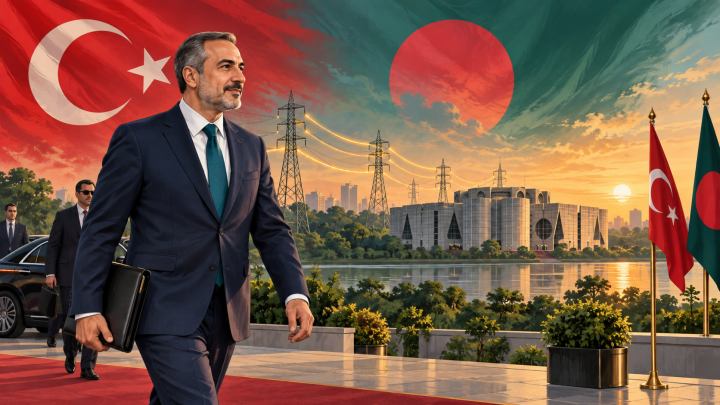
‘Want to build country together with people of all religions’
Prime Minister Tarique Rahman has appealed for Bangladeshis of every faith to take part in shaping the country’s future together, invoking the shared struggle

Table of Contents
Prime Minister Calls for Religious Unity in Building Bangladesh
Thebangladaily.com – Prime Minister Tarique Rahman has appealed for Bangladeshis of every faith to take part in shaping the country’s future together, invoking the shared struggle of religious communities during the Liberation War.
Addressing a roadside gathering in Paglapir, Rangpur, on Tuesday, the prime minister said national progress depended on cooperation among citizens regardless of religious identity. He framed that unity as an essential part of the country’s founding spirit, recalling how people from different communities joined the fight for independence.
“On the biggest festival of the Sanatan community, let us all pledge to build Bangladesh together — Muslims, Hindus, Buddhists and Christians.”
The remarks came during a programme that combines public engagement with visits connected to the religious celebrations of the Sanatan community. The prime minister’s message placed particular emphasis on mutual respect and shared responsibility, presenting Bangladesh’s diversity as a strength that can support collective development.
A Call for a Common National Effort
Tarique Rahman said the government was seeking to stand beside people who work across the country and urged citizens to renew their own commitment to national development. His appeal focused on the idea that building Bangladesh is not limited to government institutions or political leaders; it also requires the contribution of ordinary people in their workplaces, communities and families.
He stressed that sustained effort is necessary if the country is to advance. The prime minister’s comments linked social unity with hard work, suggesting that the goals of development and communal harmony should move forward together rather than be treated as separate concerns.
Bangladesh is home to Muslims, Hindus, Buddhists and Christians, and public appeals for cooperation among these communities carry significance beyond any single occasion. Such messages address the everyday civic principle that citizens with different beliefs share the same national space, economic life and hopes for future generations.
By referring to the Liberation War, the prime minister drew attention to a defining period in the nation’s history when people from varied religious backgrounds participated in a common struggle. The comparison underscored his argument that a shared purpose can bring communities together in the present as well.
Programme Includes Temple and Public Rally Visits
As part of his tour schedule, Tarique Rahman is expected to visit the puja mandap at Dharmasabha Temple in Rajshahi at around noon. The visit is set to take place during one of the major religious festivals observed by the Sanatan community.
Later in the afternoon, he is scheduled to address a public rally at the Haji Muhammad Mohsin Government High School ground. The event will provide another opportunity for him to speak directly with residents and restate his wider message about participation, work and national solidarity.
His itinerary then includes travel to Chattogram. In the evening, the prime minister is due to visit the puja mandap at JM Sen Hall in Rahmatganj before returning to Dhaka later that night.
The scheduled visits place the prime minister in multiple regions of the country during the festival period, from Rangpur in the north to Rajshahi and then Chattogram. The programme reflects an effort to connect public events with a message of inclusion across different parts of Bangladesh.
Importance of Inclusion During Religious Festivals
Religious festivals often create moments when communities gather with family, neighbours and local institutions. They can also offer a visible reminder of the country’s plural character. The prime minister’s call for Muslims, Hindus, Buddhists and Christians to work together sought to extend that spirit beyond celebration and into the broader task of national life.
His emphasis on standing beside working people also highlighted the practical side of the message. For citizens, national progress is experienced through daily labour, access to opportunity and the ability to live securely alongside neighbours of different faiths. A call for unity therefore has implications not only for public rhetoric but also for the way communities approach cooperation in ordinary life.
The prime minister urged people to see the country’s development as a shared undertaking. His remarks in Paglapir presented religious harmony, commitment to work and remembrance of the Liberation War as connected elements of that undertaking.
With temple visits and public meetings planned through the day, Tarique Rahman’s tour is expected to reinforce his appeal for a Bangladesh built through participation from all religious communities.
Related Reading
Frequently Asked Questions
What is Want to build country together?
Want to build country together is the main topic of this guide. The article explains the context, practical details, and next steps readers should understand.
Why does Want to build country together matter?
Want to build country together matters because readers are looking for a useful answer, not just a short summary. Good content should match search intent and help them decide what to do next.