Echoes of Karbala: A personal journey through Muharram in Old Dhaka
Through Muharram in Old Dhaka The Legacy of Old Dhaka Echoes of Karbala - In the late 1800s, Dacca—now known as Dhaka—thrived as a vibrant commercial and

Echoes of Karbala: A Personal Journey Through Muharram in Old Dhaka
The Legacy of Old Dhaka
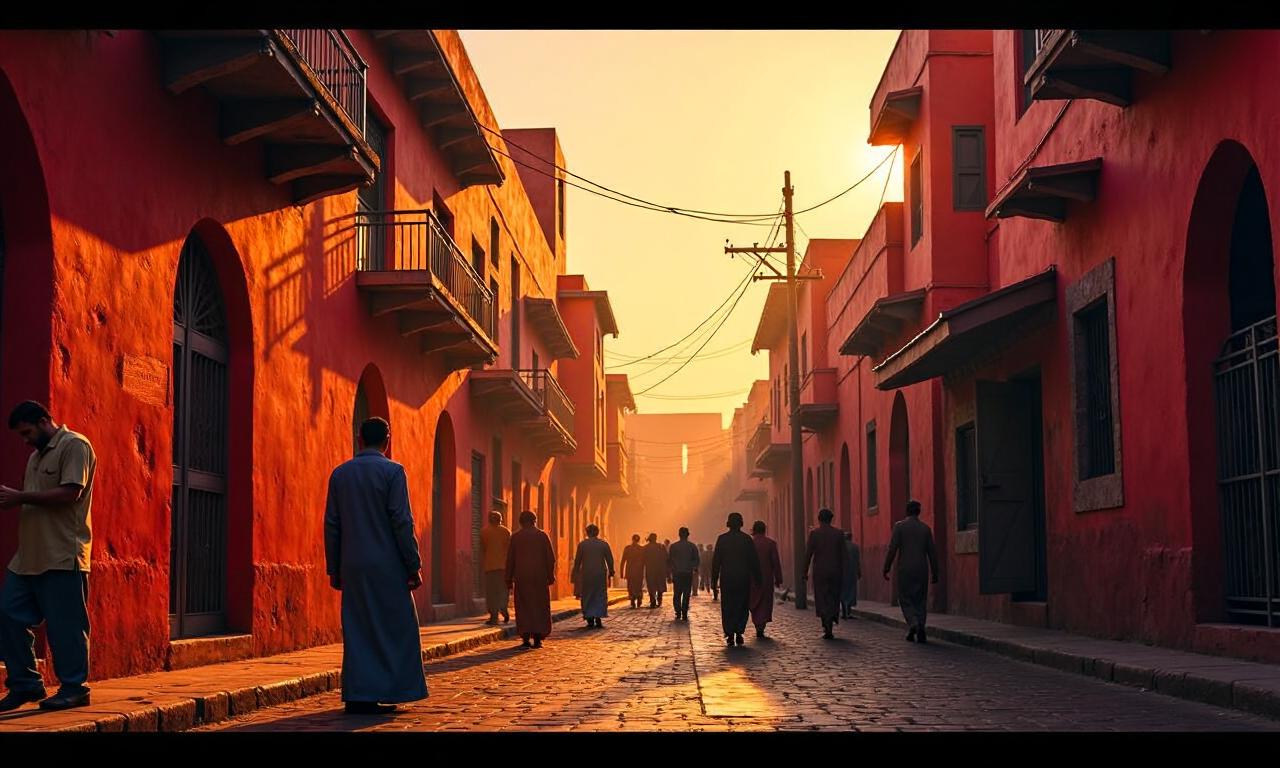
Thebangladaily.com – In the late 1800s, Dacca—now known as Dhaka—thrived as a vibrant commercial and cultural hub under British colonial governance. At the core of the city was the Old Town, a historic quarter defined by narrow alleys, lively markets, and ancient brick and timber structures that held the echoes of countless generations. Yet this heritage extends far beyond the British era, tracing its origins to the Mughal period when emperors and nobles sculpted the city into one of the subcontinent’s most influential urban centers. Monuments such as Lalbagh Fort, Ahsan Manzil, and Choto Katra remain as silent testaments to that golden age, preserving the layers of history that have shaped Dhaka over centuries.
A Family’s Footprint in Dhaka’s History
My bond with this history transcends mere scholarly interest; it is deeply personal. Family records and oral tales passed down through the ages reveal that my ancestor, Syed Fida Hussain, embarked on a journey from Medina during the reign of Mughal Emperor Jahangir. His path took him through Delhi and Calcutta before he found his home in Dhaka, where our lineage took root. Over time, his descendants contributed to the city’s development, with figures like Syed Faizuddin Hussain serving as Kotwal under Murshid Quli Khan. Later, Syed Muzaffar Hussain became a trusted confidant of the Nawabs, while Syed Faqihuddin Hussain carried forward the spiritual and intellectual legacy of his forebears as a devoted follower of Ubaidullah Ubayd Suhrawardy. The family’s influence persisted through Syed Sharfuddin Hussaini, known as Sharaf Sahib, a poet and chronicler whose works captured the essence of Dhaka’s soul.
Muharram: A Time of Collective Memory
As the moon of Muharram is sighted, the lanes near Hussaini Dalan undergo a striking transformation. An atmosphere of sorrow, longing, remembrance, and reverence envelops the neighborhood, distinguishing Muharram from other seasons. Built in 1642 by Mir Murad during the governorship of Mughal prince Shah Shuja, Hussaini Dalan has remained the spiritual heart of Muharram celebrations in the city. Local tradition claims Mir Murad was inspired by a vision of Hussain Ibne Ali (RA), leading him to create the imambara as a sanctuary for mourning the Karbala martyrs. From its halls emerged the practice of majlis gatherings, the preservation of sacred symbols like the zari and alam, and the Muharram processions that define Old Dhaka’s cultural identity.
Its Naobat Khana once rang with the solemn beats of ceremonial drums, marking the start of religious observances, while the Ganj-e-Shaheedan sheltered towering tazia structures carried through streets during Ashura. The symbolic horse Zuljanah, representing Hussain Ibne Ali (RA)’s steed, became a timeless element of these commemorations.
Muharram marks the Islamic New Year, yet in Old Dhaka, it is not a season of festivity. To outsiders, it may seem like a time of lights and communal gatherings, but for locals, it is a profound expression of collective memory tied to the tragedy of Karbala. Over centuries, these customs evolved beyond religious ritual, embedding themselves into the city’s identity. Growing up in a family whose documented presence in Dhaka spans nearly four centuries, I have witnessed these traditions not only through personal experience but also through the stories shared by my ancestors, grandfathers, and father.
Echoes Through Generations
As Muharram approached, a recurring question would arise in my childhood: What is a majlis? Why did elders don black attire? Why did laughter-filled gatherings turn into evenings of solemn reflection? These queries, asked every year as the moon rose over Old Dhaka, shaped my early understanding of the festival. With time, I came to appreciate how these traditions, rooted in the past, continue to resonate in the present.