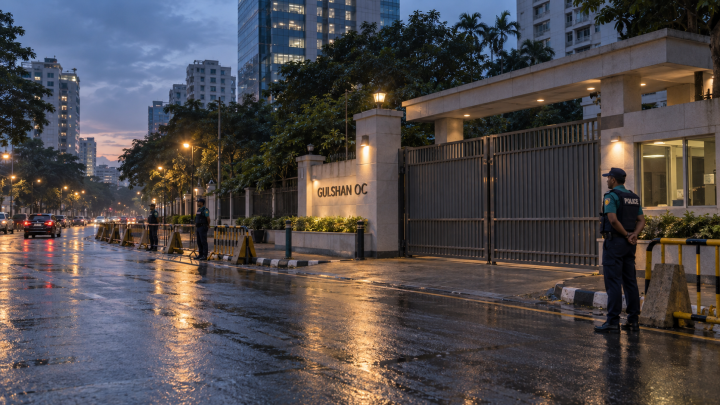
BRTC launches bus services for Dhaka Medical health workers
Dhaka's chronic traffic congestion has long made the daily commute a source of exhaustion for workers at the city's major public institutions. Nowhere is this

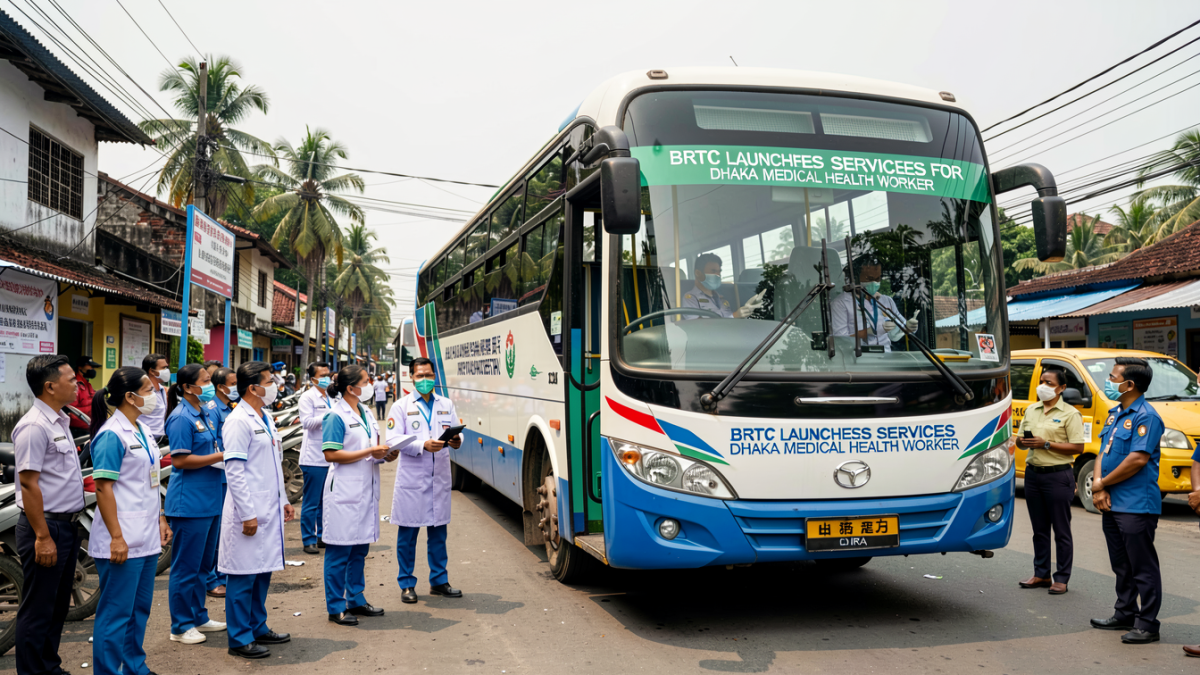
Table of Contents
State Transport Authority Rolls Out Dedicated Commuter Routes for Dhaka’s Largest Teaching Hospital Staff
Thebangladaily.com – Dhaka’s chronic traffic congestion has long made the daily commute a source of exhaustion for workers at the city’s major public institutions. Nowhere is this felt more acutely than among the thousands of doctors, nurses, and support personnel who serve at Dhaka Medical College Hospital, one of Bangladesh’s oldest and busiest teaching hospitals. Beginning this week, that daily ordeal receives a meaningful reprieve: the Bangladesh Road Transport Corporation has put three double-decker buses into regular operation along four designated routes, giving hospital employees a dedicated, subsidized means of getting to and from work.
Inauguration at the Garden Gate
The service was formally inaugurated on Tuesday afternoon at the hospital’s Garden Gate. Brigadier General Md Asaduzzaman, who serves as director of the Dhaka Medical College Hospital complex, presided over the ceremony and addressed the assembled staff. His remarks underscored a persistent gap in institutional support: while the hospital employs a workforce in which women constitute a substantial majority, no dedicated internal transport arrangement had previously existed to ease their daily travel.
“To make commuting easier and safer for healthcare workers, we took the initiative to launch the bus service at discounted fares through an agreement with BRTC.”
The director’s statement highlighted that the hospital itself brokered the arrangement with the state transport authority, negotiating reduced ticket prices so that the service would remain affordable for junior staff whose salaries, particularly those of newly posted nurses and paramedical workers, often leave little margin for expensive private transport.
Why the Routes Matter
Four corridors were selected to connect the hospital with residential clusters where a significant share of its workforce lives. Dhaka Medical College Hospital, situated in the heart of the capital’s medical district, draws staff from across the metropolitan area. Without a reliable, scheduled option, many employees—especially women working night shifts or early-morning rounds—have historically depended on informal auto-rickshaws, shared taxis, or lengthy walks to the nearest public bus stop. The new double-decker buses, with their higher seating capacity and fixed schedules, are designed to absorb that demand in a structured, predictable manner.
The choice of double-decker vehicles is notable. Dhaka’s road network, while dense, rarely accommodates the longer single-deck coaches that dominate intercity routes. Double-deckers offer greater passenger throughput per trip without requiring the extra road length, making them a practical fit for intra-city commuter corridors. Their introduction into a hospital-specific service marks a further diversification of how BRTC deploys its fleet beyond the conventional intercity and suburban roles.
Staff Welfare and the Gender Dimension
The director’s observation that a large portion of the hospital’s doctors, nurses, and other employees are women is not incidental. Bangladesh’s nursing and paramedical workforce skews heavily female, and Dhaka Medical College Hospital, as a premier teaching institution, employs hundreds of women in clinical and administrative roles. For many of them, the evening commute home after a twelve- or sixteen-hour shift has been a genuine safety concern, particularly during monsoon months when roads flood and informal transport becomes scarce. A scheduled, company-identified bus with known routes and fixed timings reduces exposure to unregulated vehicles and late-night uncertainty.
The discounted-fare element is equally important. Public-sector salaries in Bangladesh’s healthcare system, while stable, do not always stretch to cover daily private-transport costs in a city where fuel prices and traffic conditions keep fares elevated. By negotiating reduced rates through a formal agreement with BRTC, the hospital ensures that the service is accessible to the lowest-paid tiers of its workforce, not merely to senior consultants who can afford private cars.
BRTC’s Expanding Role in Urban Commuting
The Bangladesh Road Transport Corporation has traditionally been associated with long-distance and suburban bus operations. Its entry into a hospital-specific, intra-city commuter arrangement signals a broader shift toward serving institutional demand within the capital. If the four initial routes prove successful, the model could be replicated at other large public hospitals, universities, and government complexes that face similar commuting pressures. The state transport authority’s fleet, already one of the largest in South Asia, has the capacity to absorb such institutional contracts without disrupting existing intercity schedules.
What Comes Next
The initial deployment of three double-decker buses is a pilot-scale operation. Hospital administration will monitor ridership, route efficiency, and staff feedback over the coming weeks before deciding whether to expand the number of vehicles or add further corridors. For now, the service represents a concrete step toward addressing a long-standing welfare gap: the recognition that a hospital’s obligation to its workforce extends beyond the hospital walls and into the streets of the city where those workers live, travel, and return each day.
Related Reading
Frequently Asked Questions
What is BRTC launches bus services for Dhaka?
BRTC launches bus services for Dhaka is the main topic of this guide. The article explains the context, practical details, and next steps readers should understand.
Why does BRTC launches bus services for Dhaka matter?
BRTC launches bus services for Dhaka matters because readers are looking for a useful answer, not just a short summary. Good content should match search intent and help them decide what to do next.