Bangladeshi foundation brings humanitarian initiatives to UNGA
A humanitarian initiative that began in a Bangladeshi village 14 years ago brought its message of dignity, inclusion and social development to events held

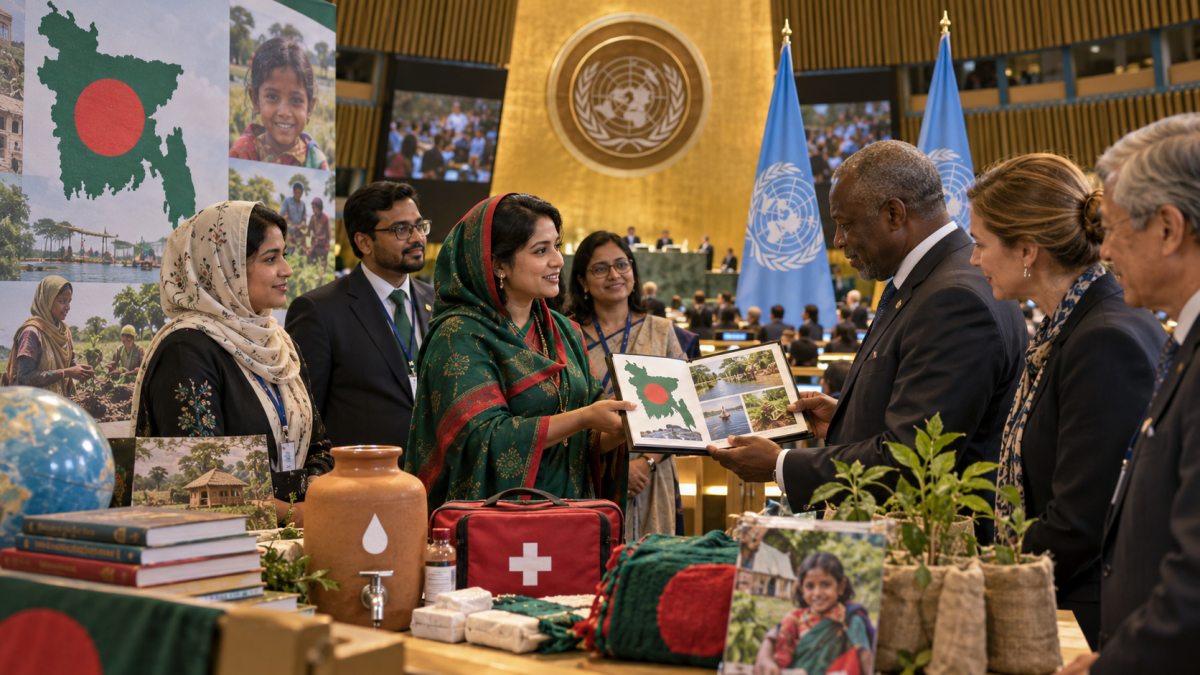
Table of Contents
Bangladeshi Humanitarian Foundation Highlights Global Goals During UNGA Week
Thebangladaily.com – A humanitarian initiative that began in a Bangladeshi village 14 years ago brought its message of dignity, inclusion and social development to events held alongside the 81st United Nations General Assembly in New York.
The Dr Mostafa-Hajera Foundation took part in programmes and discussions during the UNGA high-level week, with its founder, Captain A. K. M. Golam Kibria (CIP), attending a range of UN and UNGA-related engagements from September 21 to 25.
The gatherings addressed major international concerns, including poverty, inequality, human rights, climate pressures, sustainable development, peace and the growing influence of artificial intelligence. For the foundation, these issues are closely connected: advances in technology and economic activity have limited value if people remain excluded from education, health services and opportunities to build secure lives.
The world does not need technology alone. It needs wisdom, cooperation and humanity to guide it.
Captain Kibria’s remarks reflect the philosophy he calls “Human Equity Civilization.” The idea centres on a society in which every person can live with equal dignity and has access to opportunity, education, essential resources and the right to pursue development. The foundation maintains that a fair and peaceful future depends on humanitarian values and cooperation as much as it does on economic or technological progress.
Five goals across 15 countries
The organisation is now active in 15 countries through its Five Zero Global Campaign. The campaign is built around five stated objectives: eliminating begging, illiteracy, homelessness, deaths caused by a lack of medical care, and the condition of being without skills.
These targets place attention on challenges that can overlap in the lives of vulnerable families. A person lacking education may also struggle to find stable work; a household without income may face barriers to healthcare or housing. By linking education, skills training, medical support and humanitarian assistance, the foundation presents its work as a broader effort to protect human potential rather than a programme limited to short-term charity.
The campaign’s emphasis on skills is especially significant in discussions of social inclusion. Training and education can help people participate more fully in their communities and economies, while access to healthcare can prevent illness from pushing households further into hardship. The foundation has described these areas as central to its wider humanitarian mission.
Focus on Rohingya humanitarian needs
Support for the Rohingya community remains one of the foundation’s key priorities. On September 23, a high-level side event at UN Headquarters examined the continuing Rohingya crisis under the title, “The Rohingya Crisis: A Renewed Call for a Durable Solution from Protracted Displacement, with Justice and Accountability.”
Bangladesh and The Gambia jointly hosted the event, which brought together UN representatives and other stakeholders. Its discussions focused on humanitarian support, accountability, justice and the search for a lasting resolution to the long-running displacement of Rohingya people.
At the event, Bangladesh Prime Minister Tarique Rahman, who attended as chief guest, called for a clear and credible roadmap to enable the early, safe, voluntary, dignified and sustainable return of Rohingyas to Myanmar. Those principles are central to any discussion of repatriation, as a durable solution must address both safety and the rights of displaced people.
The Dr Mostafa-Hajera Foundation has previously carried out humanitarian and medical assistance programmes for Rohingya communities in Bangladesh. It plans to broaden its work in healthcare, education, skills development and humanitarian empowerment. Such areas are relevant not only to immediate needs but also to the ability of displaced communities to preserve dignity and build resilience during prolonged uncertainty.
A symbolic moment on an international stage
The foundation described the appearance of its logo on a screen during the September 23 Rohingya-focused event as an important milestone. For an organisation whose work began at village level in Bangladesh, visibility at a UN venue represented a symbolic connection between local humanitarian action and international policy discussions.
Its participation during the UNGA high-level week also offered an opportunity to place its priorities before a wider audience. The issues raised in New York—poverty, rights, climate change, peace and responsible technological development—are global in scale, but their effects are experienced most directly by individuals and communities.
The foundation’s message is that responses to these challenges should be measured not simply by policy announcements or economic indicators, but by whether people can access medical care, learning, shelter, skills and equal opportunity. Its Five Zero campaign and planned Rohingya-related initiatives seek to translate that view into practical humanitarian work.
From its early beginnings in Bangladesh to participation in international discussions, the organisation has presented its journey as evidence that local initiatives can contribute to broader conversations on justice, development and human dignity.
Related Reading
Frequently Asked Questions
What is Bangladeshi foundation brings humanitarian initiatives to UNGA?
Bangladeshi foundation brings humanitarian initiatives to UNGA is the main topic of this guide. The article explains the context, practical details, and next steps readers should understand.
Why does Bangladeshi foundation brings humanitarian initiatives to UNGA matter?
Bangladeshi foundation brings humanitarian initiatives to UNGA matters because readers are looking for a useful answer, not just a short summary. Good content should match search intent and help them decide what to do next.